Colorful, hand-knotted and full of meaning, the friendship bracelet has been passed down through generations. We give them to friends, wear them on vacation, make them with family… and they're back in a big way with the friendship bracelet craze. In this guide, discover its meaning, the symbolism of the colors, and an easy friendship bracelet tutorial step by step: with 3 strands, 4 strands, in a chevron pattern, as a round bracelet using a cardboard wheel, plus how to tie and close it.
Friendship bracelets: definition and origins
In France, people call it a "bracelet brésilien" (Brazilian bracelet): a bracelet made of colorful cotton threads, knotted or braided by hand. Elsewhere, it's better known as a friendship bracelet, because it's so often made to be given away.
The French name comes from a tradition in Salvador de Bahia, Brazil: the ribbons of the Senhor do Bonfim church. You tie the ribbon around a loved one's wrist with three knots, making a wish with each knot. The bracelet must never be taken off: according to the belief, your wishes come true the day it falls off on its own. That good-luck idea lives on in today's friendship bracelets.
Friendship bracelet meaning and symbolism
A wish on your wrist
The rule is simple: someone else ties the bracelet on you, you make a wish (or three, one per knot), and you keep it on until it comes off naturally. Taking it off yourself would "cancel" the wish, according to tradition.
What does it mean when a friendship bracelet breaks?
It's good news! When the bracelet breaks or falls off on its own, it's a sign your wish is about to come true. It can take several months: a cotton bracelet worn every day eventually wears out from water and friction.
What the colors mean
There's no official rule, but a popular symbolism has grown up around friendship bracelet colors:
- Red: love, passion, courage;
- Pink: tenderness and friendship;
- Blue: serenity, wisdom;
- Green: hope, nature, health;
- Yellow and orange: joy, energy, success;
- Purple: spirituality, creativity;
- White: peace, purity;
- Black: protection, elegance.
What matters most is the intention: choose colors that mean something to the person you're giving it to.
Supplies for making friendship bracelets
- Thread: the most common is cotton embroidery floss, soft and very colorful. Pearl cotton gives a shinier finish, and waxed nylon cord holds up better in water.
- Scissors and a tape measure or ruler.
- Something to hold the bracelet: tape on a table, a safety pin on a cushion or your jeans, or a clipboard.
- For the round version: a piece of thick cardboard (see below).
How long should the thread be? Allow about 80 cm to 1 m (31 to 39 in) per strand for an adult bracelet. Knots "eat up" a lot of thread: it's better to cut too long than to run short halfway through.
Basic friendship bracelet knots
Almost every friendship bracelet pattern relies on two knots. In each knot, there's a working strand (the one tying the knot) and a base strand (the one you knot around, held taut).
The forward knot
- Take the left strand (working) and cross it over the next strand (base), making a "4" shape.
- Pass the end of the working strand under the base strand, then bring it back up through the loop.
- Hold the base strand taut and pull the working strand upward to tighten the knot against the top of the bracelet.
- Repeat a second time: one full knot = two identical half-knots.
Result: the working strand has moved to the right of the base strand, and its color shows on the knot.
The backward knot
It's the mirror image of the forward knot: the right strand crosses over the left strand in a reversed "4," comes back up through the loop, and you tighten. Twice. The working strand then moves to the left.
Forward-backward and backward-forward knots
A forward half-knot followed by a backward half-knot (or vice versa): the working strand ties its knot but stays in place. These knots are used to create designs (hearts, diamonds, letters) by choosing which color shows. That's what bracelet patterns tell you.
Tip: if your knot forms on the wrong strand, the base strand wasn't held taut enough. Keep it pulled down while you tighten.
Easy 3-strand friendship bracelet tutorial
The simplest design, perfect for beginners or kids: the braid.
- Cut 3 strands (or 3 groups of several strands for a thicker bracelet) about 50 cm (20 in) long.
- Tie a simple knot 8 cm (3 in) from the end and secure it to your holder.
- Braid it like hair: the left strand crosses to the center, then the right strand crosses to the center, and so on, tightening evenly.
- When the braid fits around your wrist, finish with a simple knot.
4-strand friendship bracelet tutorial: diagonal stripes
The great classic, which teaches you the forward knot. With 4 colors, you get pretty diagonal stripes.
- Cut 4 strands of about 80 cm (31 in) in 4 different colors. Knot them together 8–10 cm (3–4 in) from the end and secure the knot.
- Spread the strands out in the order you like, for example A B C D.
- Take strand A (far left) and tie a forward knot on B, then on C, then on D. Strand A ends up on the far right: you've finished your first row.
- Start again with the new left strand (B), which in turn ties a forward knot on each strand to the right edge.
- Keep going row after row until you reach the length you want (about 15 to 18 cm, or 6 to 7 in, of knots for an adult wrist).
For wider stripes, double each color (8 strands: A A B B C C D D).
The chevron friendship bracelet (8-strand pattern)
The "V" pattern is the iconic design. It's made with an even number of strands arranged in a mirror image.
- Cut 4 colors × 2 strands of about 1 m (39 in), and arrange them as a mirror image: A B C D D C B A.
- Left side: the outer strand A ties a forward knot on B, C, then D, and stops at the center.
- Right side: the outer strand A ties a backward knot on B, C, then D, and stops at the center.
- At the center: the two A strands meet side by side; knot them together with a forward knot. Your first "V" is done.
- Start again with the new outer strands (B), and so on.
The round friendship bracelet
Spiral version (no cardboard)
Gather 4 or more strands. Take one strand of a single color and tie forward half-knots (just one pass, not two) around all the other strands held together. After a few knots, the bracelet starts twisting into a spiral on its own. Switch working strands to change colors.
Cardboard wheel version
This is the famous "cardboard wheel" method (inspired by Japanese kumihimo), which makes an even, round cord.
- Cut a disc of thick cardboard about 10 cm (4 in) in diameter. Punch a 1 cm (0.4 in) hole in the center and cut 8 evenly spaced notches around the edge.
- Cut 7 strands of about 60 cm (24 in), knot them together and push the knot through the center hole.
- Slip one strand into each notch: one notch stays empty.
- Starting from the empty notch, count 3 strands and move the 3rd strand into the empty notch.
- Another notch is now free: start again by counting 3 strands from it, always in the same direction.
- The round cord forms under the cardboard. Gently pull it down from time to time.
How to tie and close a friendship bracelet
- Simple knot: the traditional method. Braid the leftover strands on each side, then tie them around the wrist with a double knot. The bracelet stays put… until it falls off on its own.
- Sliding knot (adjustable bracelet): overlap both ends, then, with an extra strand, tie 4 to 6 square knots (macramé knots) around both ends. Trim and lightly melt the ends if the cord is nylon. The bracelet opens and closes by pulling on the ends.
- Loop and knot: leave a small loop at the start of the bracelet, then slip the final knot through it.
Friendship bracelets for women: the trends
Long associated with the playground and summer camp, the friendship bracelet has become a real fashion accessory, fueled by the friendship bracelet revival. Today's trends:
- pastel shades and ombré (dusty pink, lilac, seafoam green), softer than bright colors;
- fine thread and macramé, for a more delicate look than a wide bracelet;
- gold accents: a bead, a charm or a heart slipped onto the thread;
- matching bracelets to share with a friend, a sister or your daughter.
How to wear a friendship bracelet with other jewelry
The friendship bracelet isn't just for beach looks anymore: paired with gold jewelry, it adds a boho, personal touch to a dressier outfit.
- With a dainty gold chain: the easiest duo. The colorful thread and the shine of gold set each other off.
- With a bangle: a thin gold bangle next to one or two friendship bracelets creates a balanced stack of rigid and soft. See our bangle bracelet guide.
- With a watch: slide the friendship bracelet toward your hand and the watch higher up the wrist, or wear each on a different wrist.
- With a symbol bracelet: a clover or an evil eye extends the good-luck idea of the friendship bracelet.
- By echoing a color: choose a thread that picks up a color in your outfit, or the mother-of-pearl of another piece.
The golden rule: three to five bracelets max on one wrist, with one dominant metal color. All our combinations are in the guide how to stack bracelets.
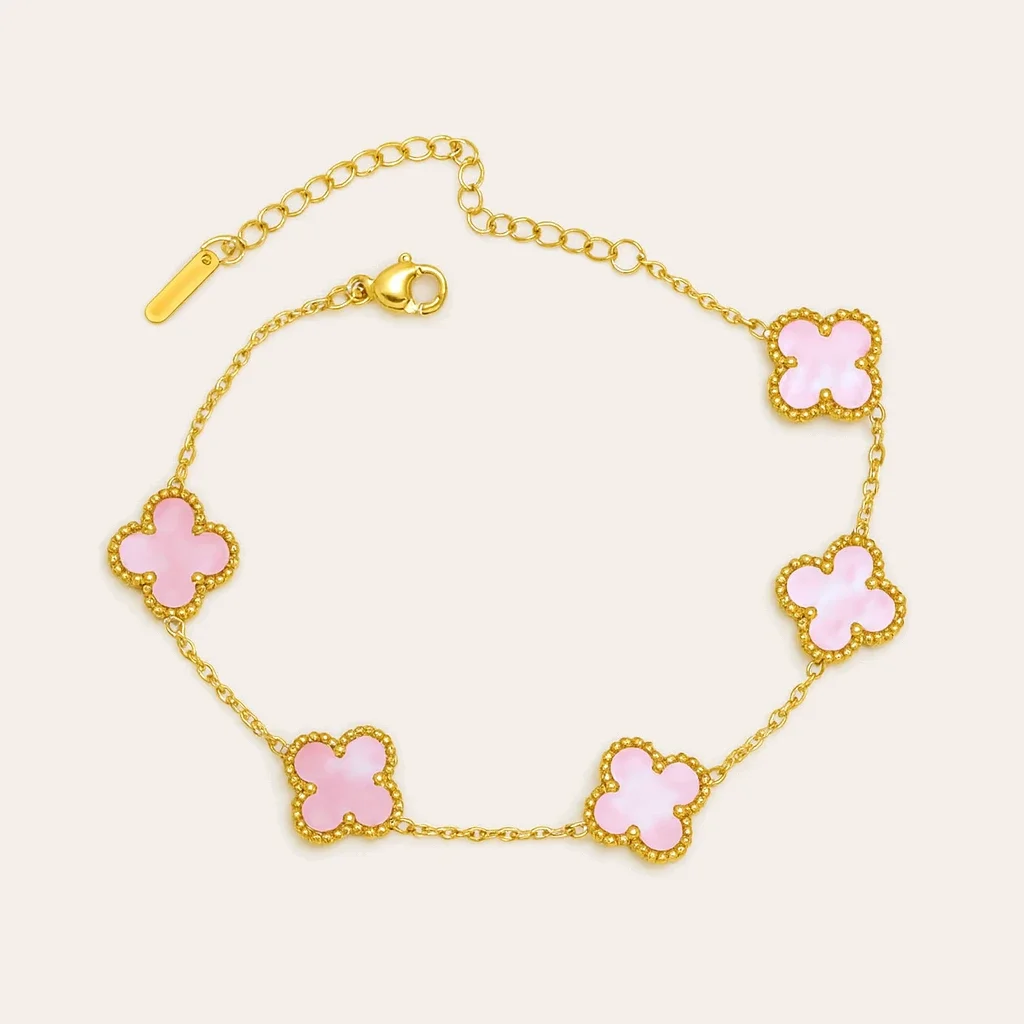
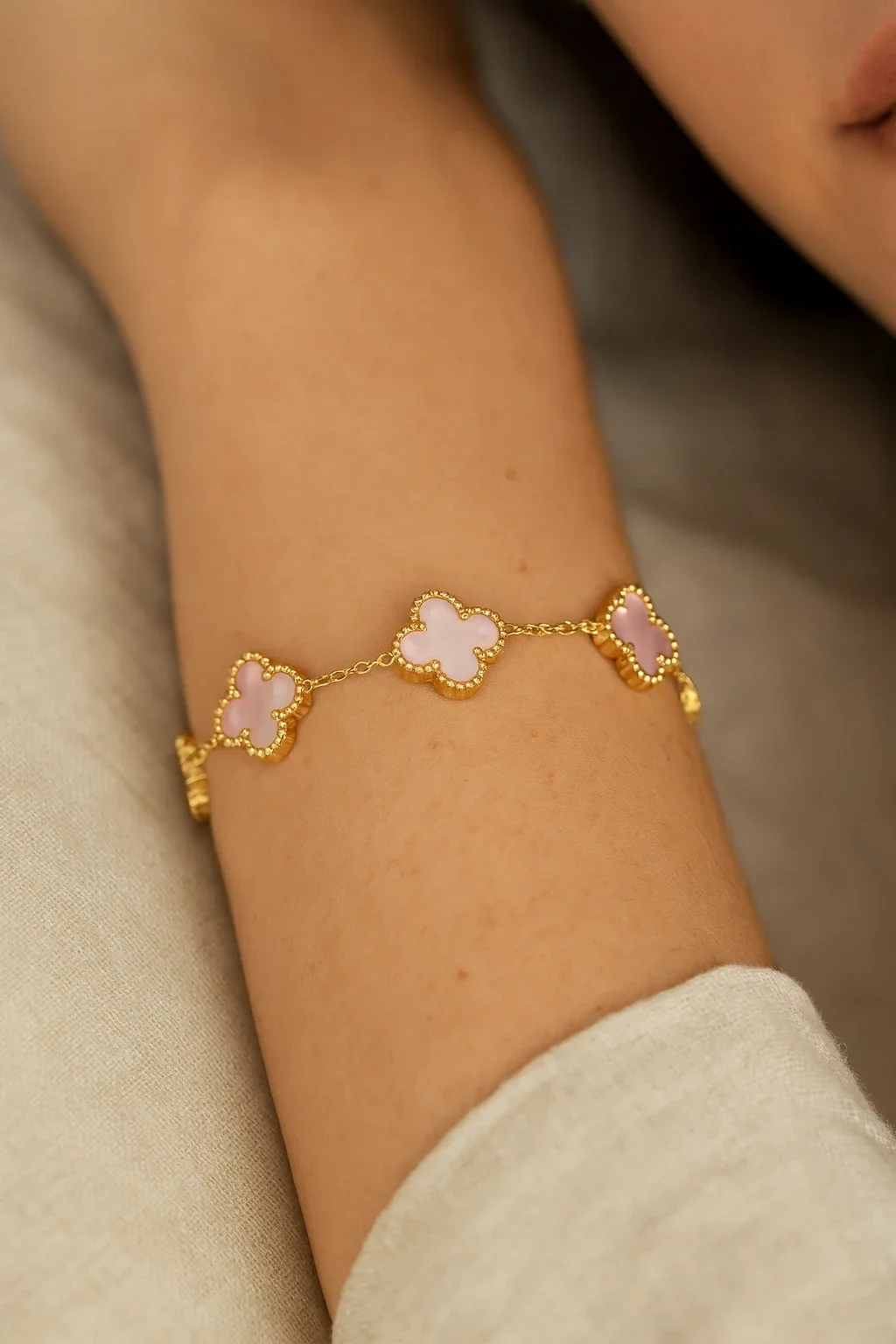
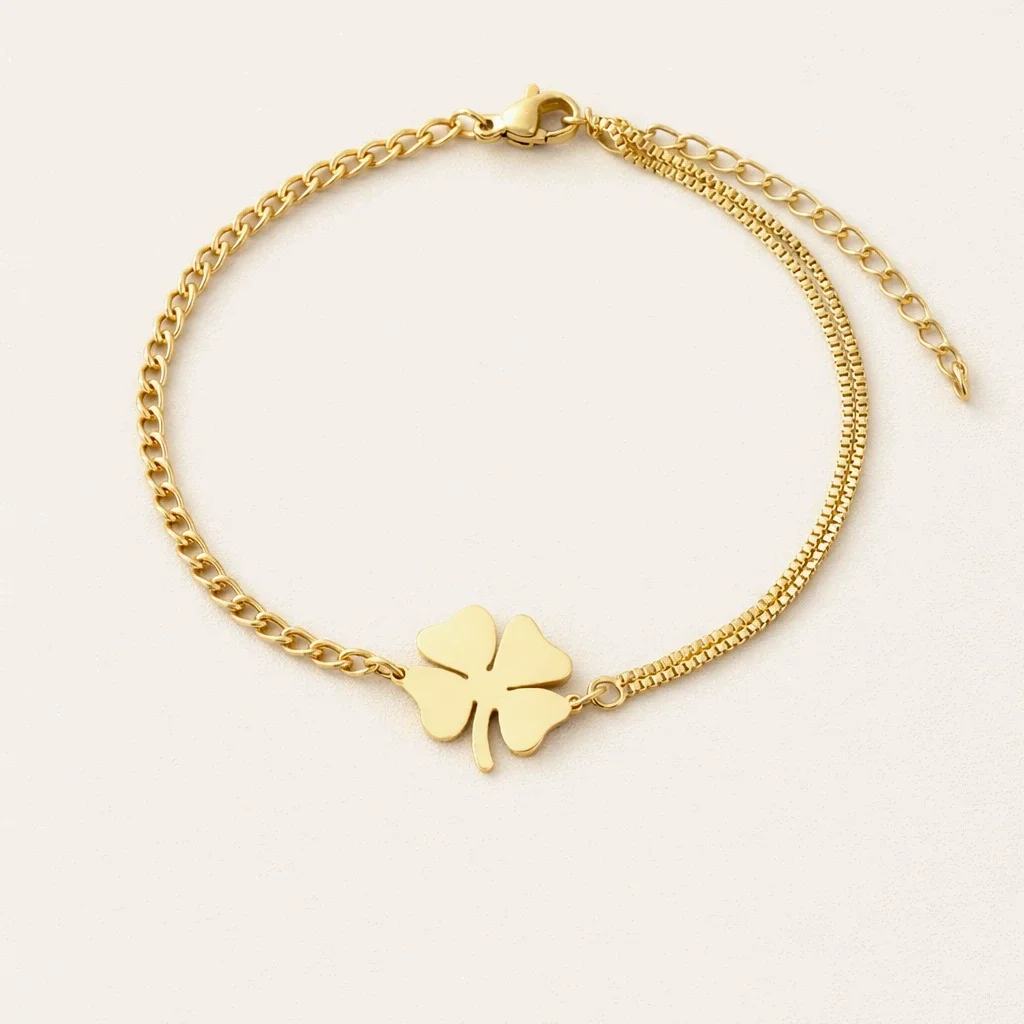
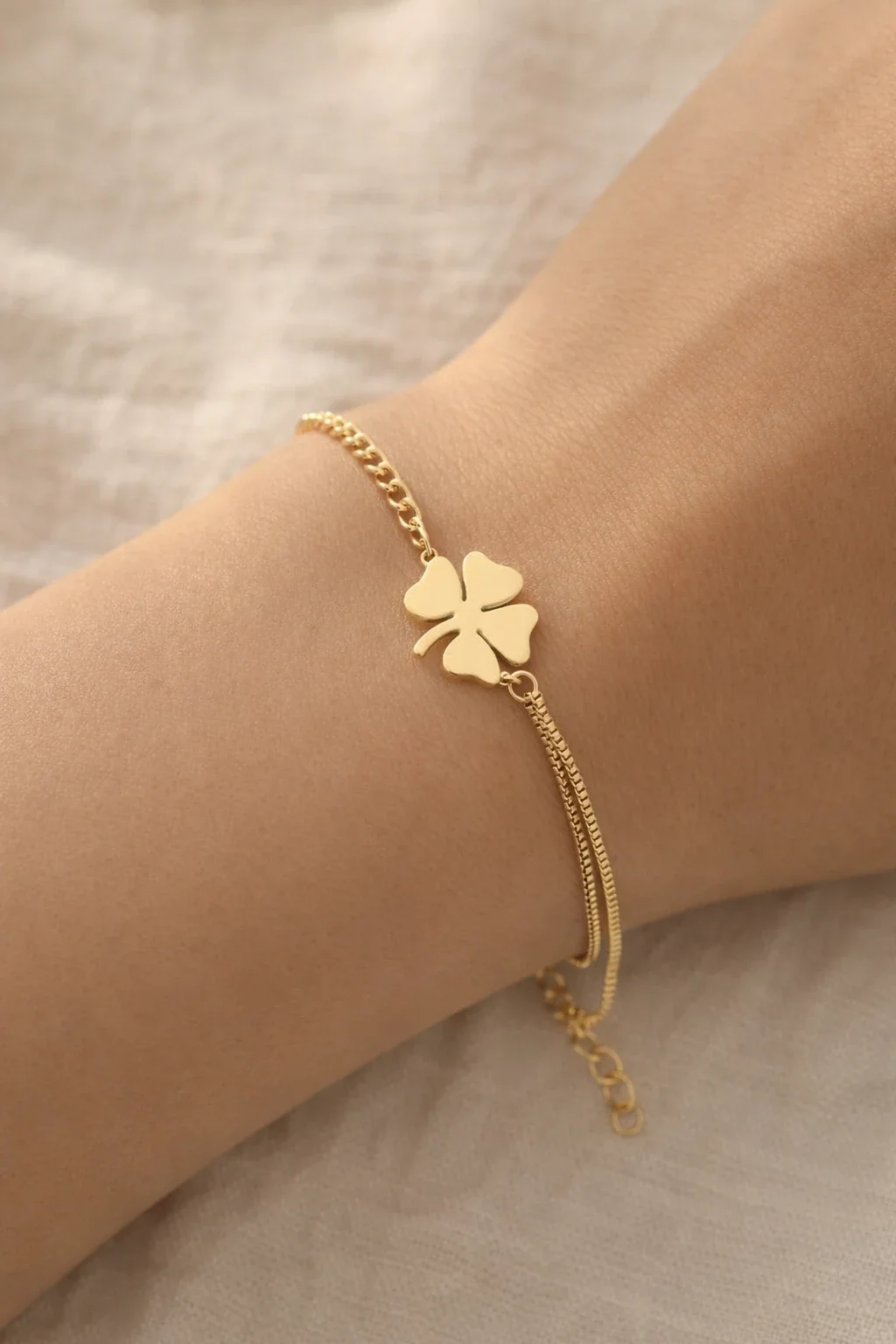
Friendship bracelets, jewelry edition
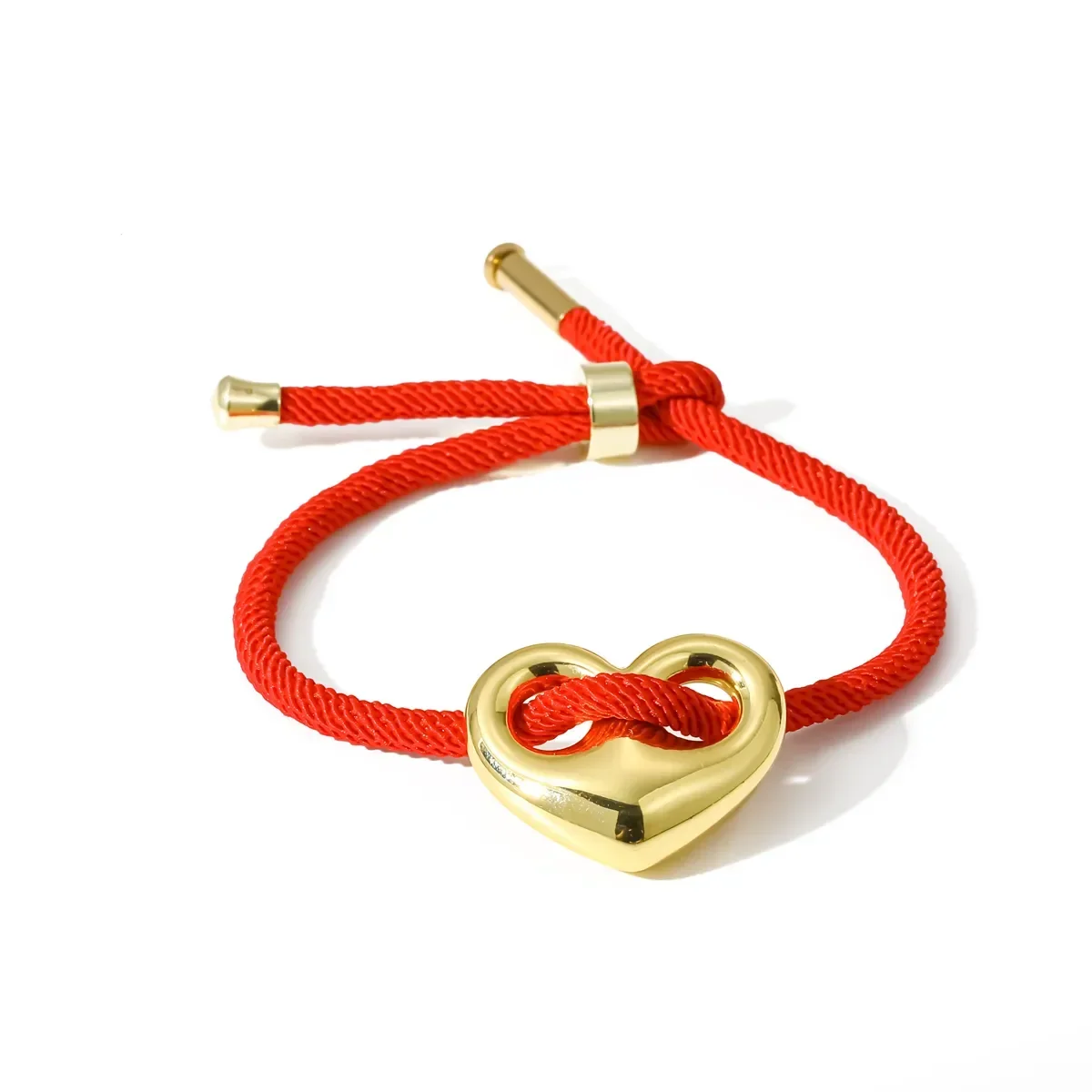
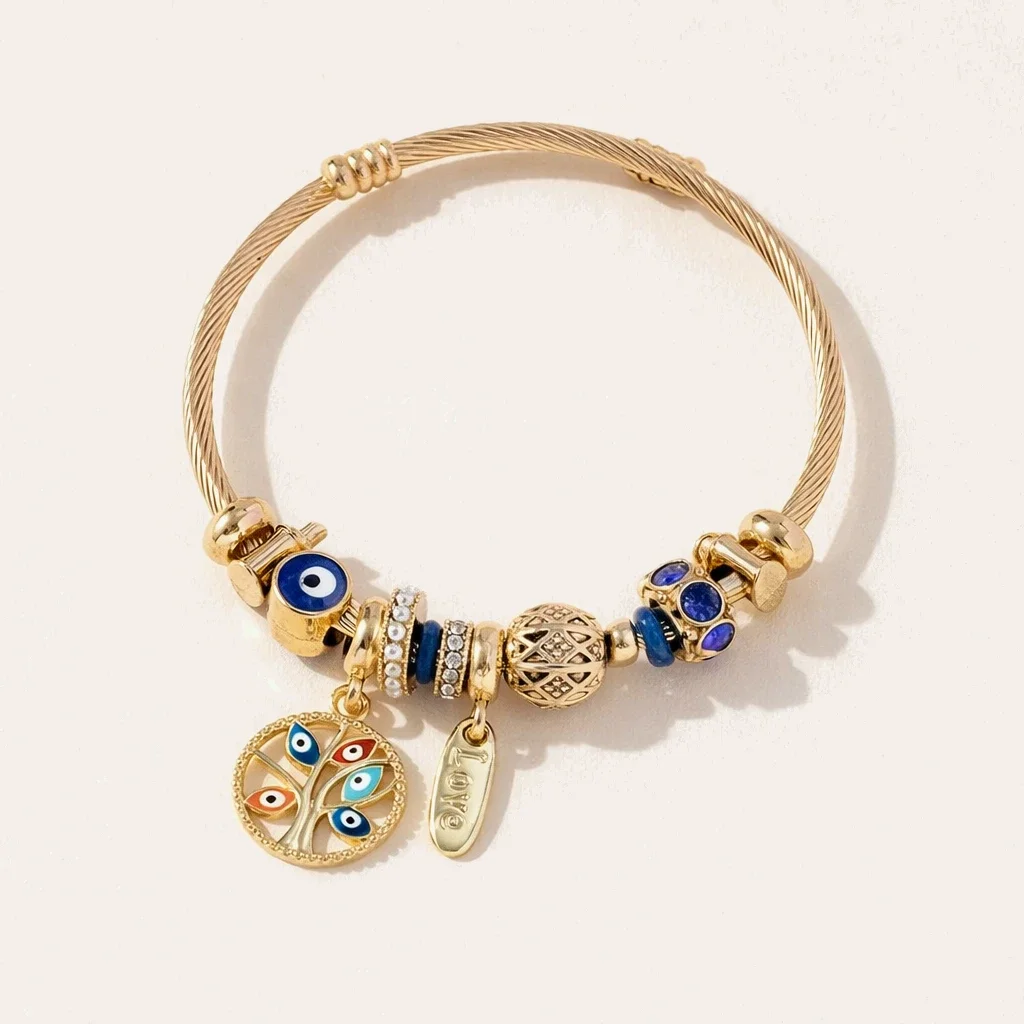
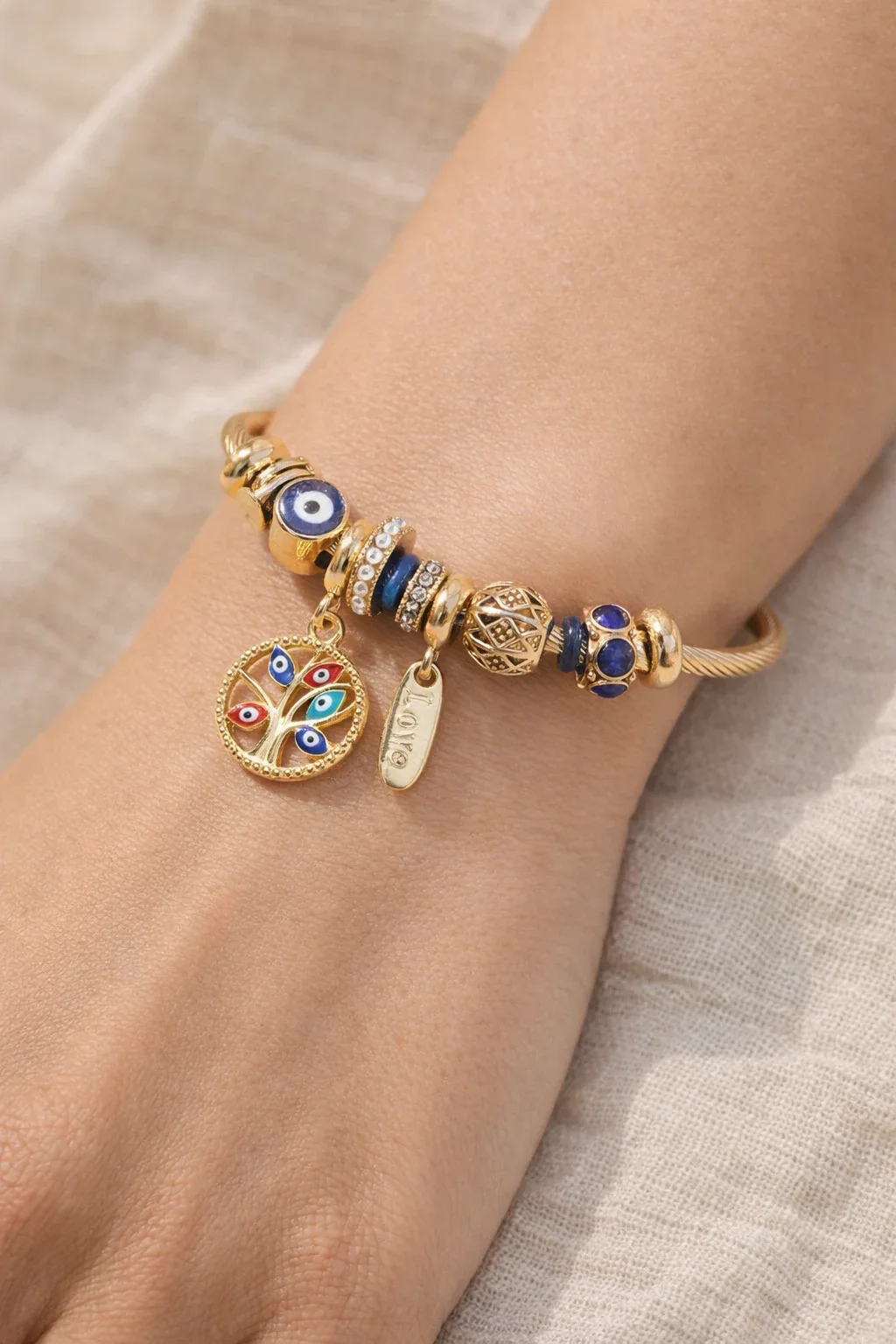
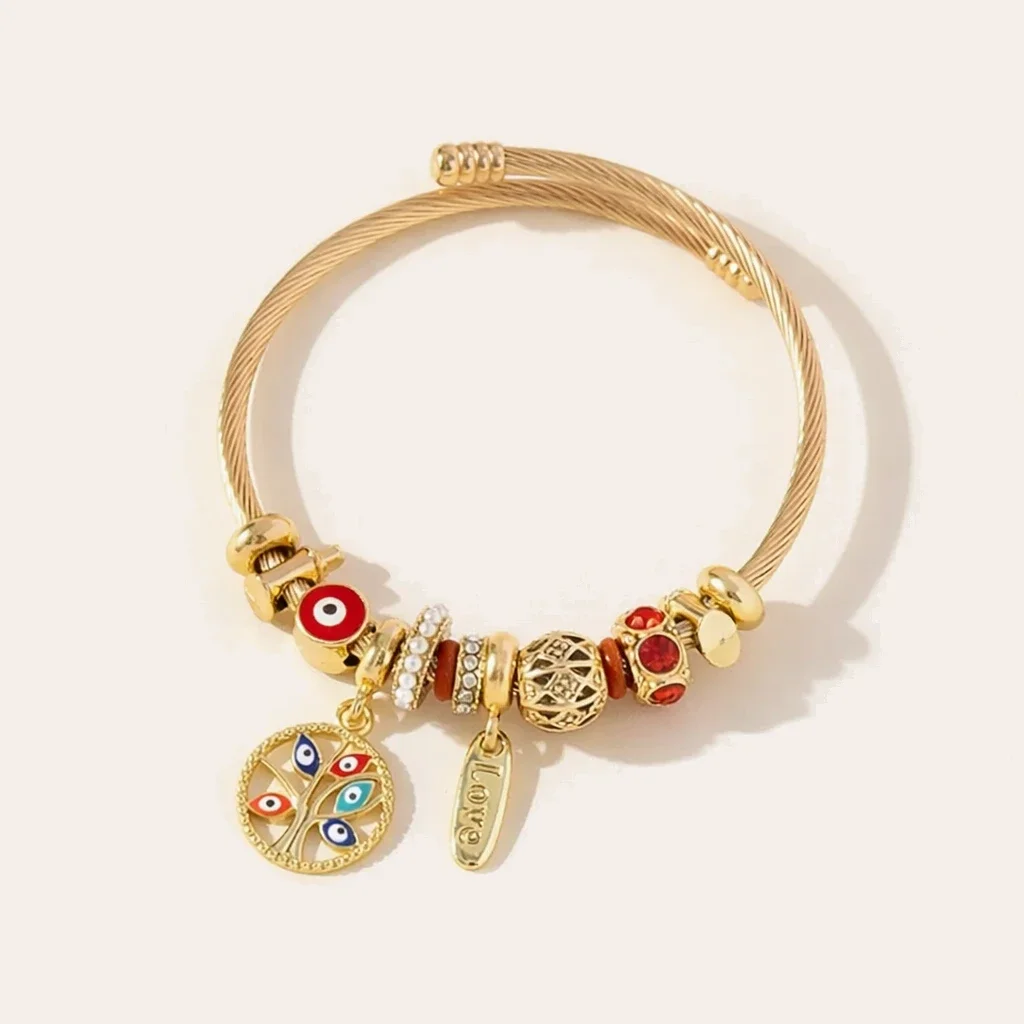
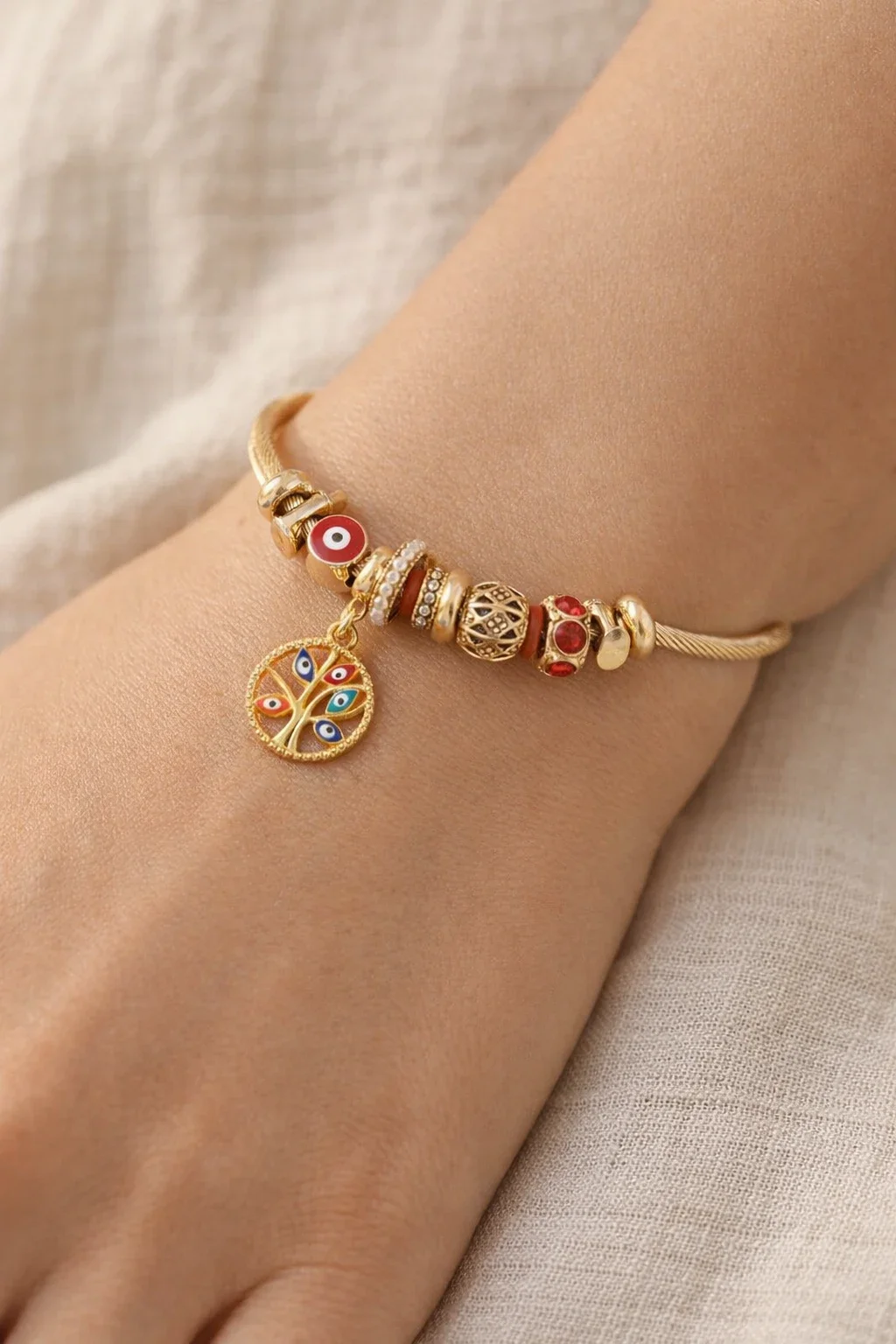
Love the friendship bracelet spirit but don't have time to knot? The cord bracelet is the jewelry version: a twisted colored cord, an adjustable sliding closure just like a friendship bracelet, and a gold heart for a precious touch. A friendship gift that lasts longer than cotton thread.
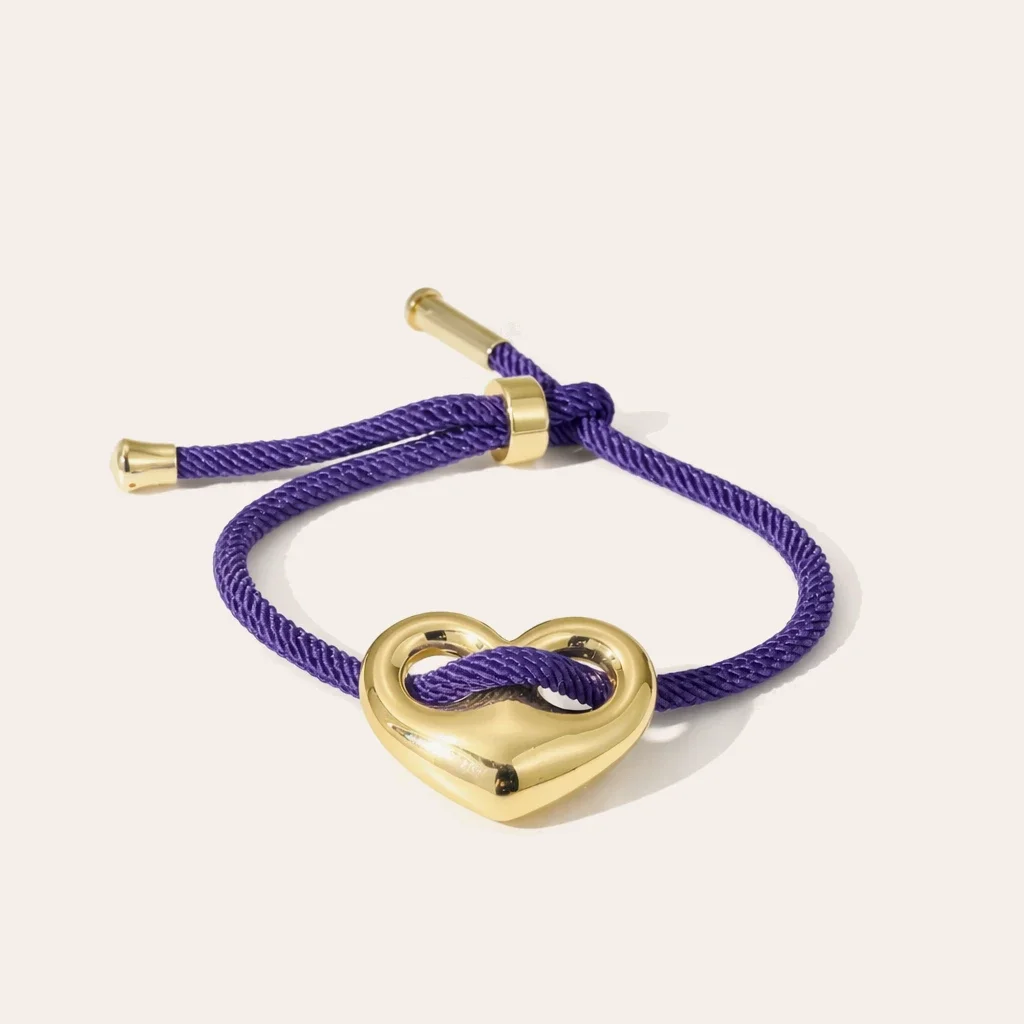
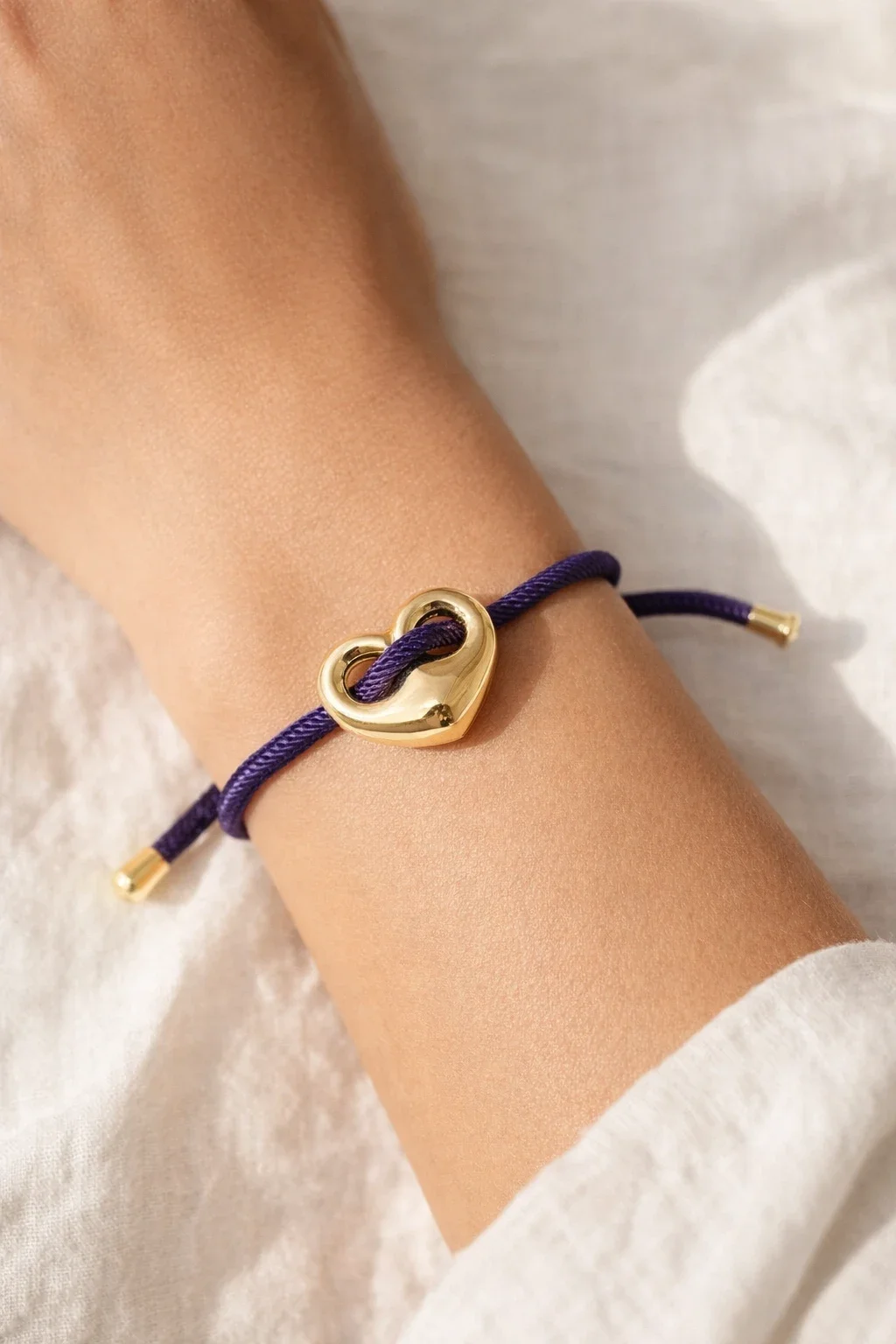
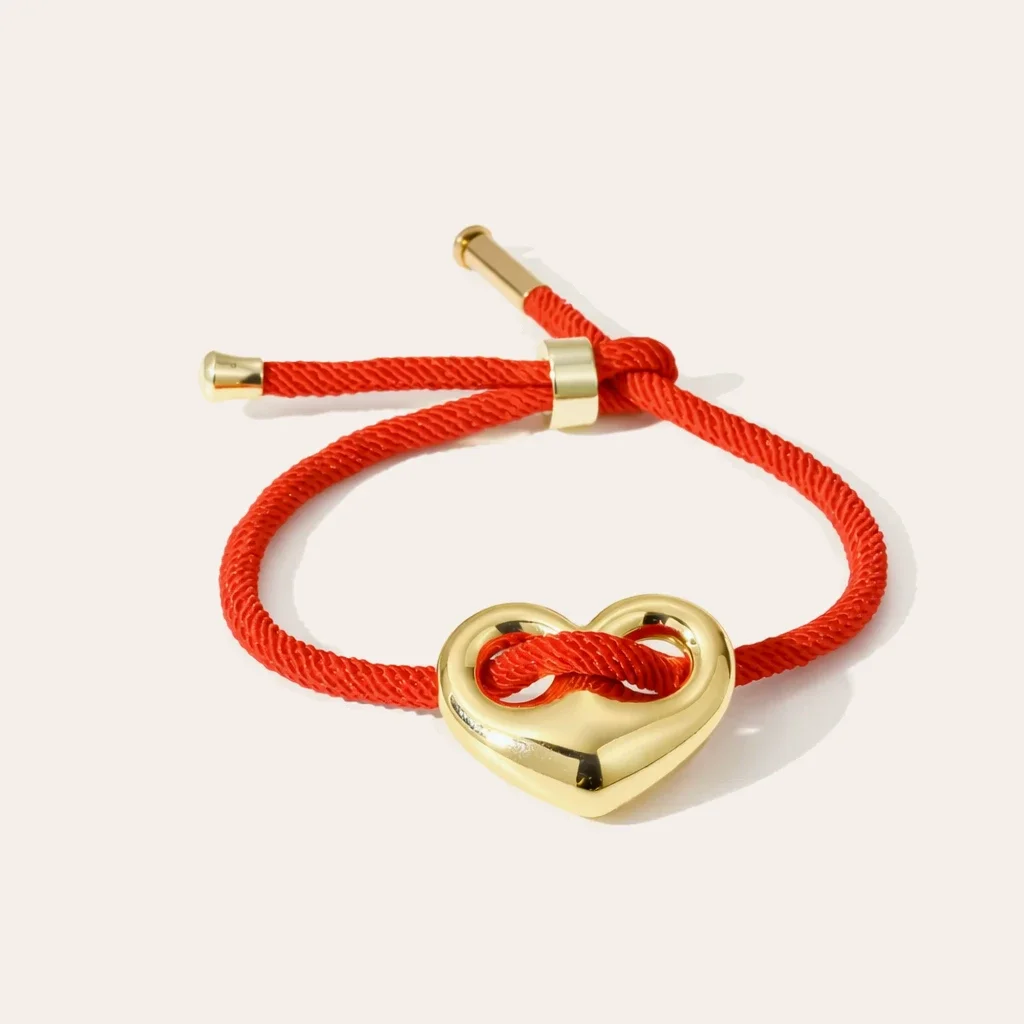
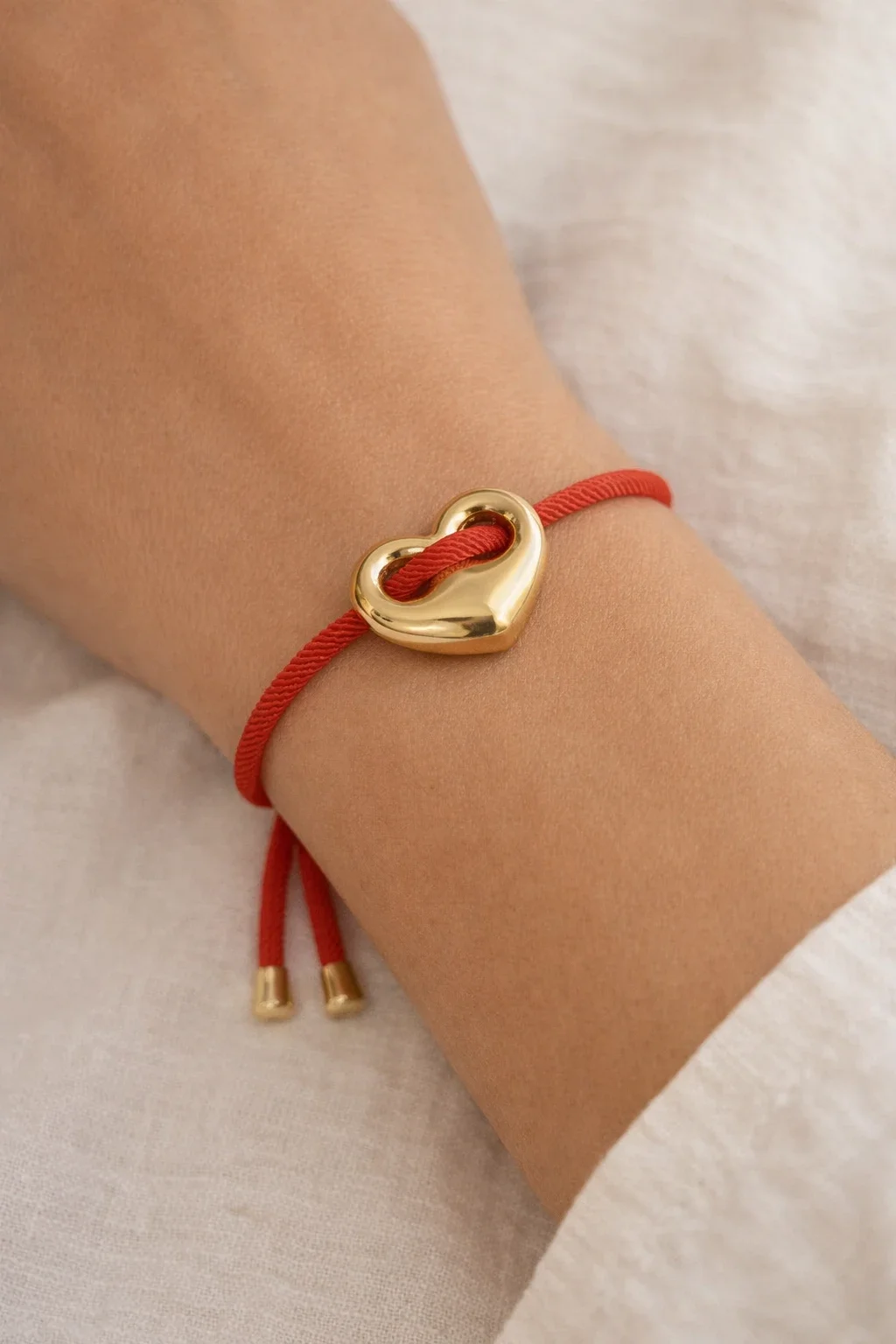
These cords look great stacked with a dainty chain or a gold bangle: follow our tips to build your bracelet stack, and discover the other 2026 bracelet trends for women.
FAQ
How do you make an easy friendship bracelet?
Start with the 3-strand braid, then move on to diagonal stripes with 4 strands: just one knot (the forward knot) is all you need for this design.
How long does it take to make friendship bracelets?
Allow anywhere from 15 minutes for a braid to 1 or 2 hours for a diagonal or chevron design when you're starting out. You get much faster with practice.
Can you shower with a friendship bracelet?
Yes, cotton handles water, but it gradually fades and wears out faster. That's actually what makes it fall off… and your wish come true, according to tradition.
How do you read a friendship bracelet pattern?
A pattern shows each knot as a colored circle, with an arrow indicating the knot type: an arrow pointing right for a forward knot, left for a backward knot, and a bent arrow for forward-backward and backward-forward knots. You read it row by row, from top to bottom.
Can men wear friendship bracelets?
Of course: in muted colors (black, navy, khaki) or as a thin cord, it looks great on a man's wrist, alone or with a watch.
And for a ready-to-wear bracelet, ours are shipped with care from Aix-en-Provence, France, with free shipping to the USA: browse our full bracelet collection.