Helix, tragus, conch, upper lobe: the curated ear, with several piercings and earrings spread across the whole ear, is one of the biggest jewelry trends right now. But you need to know which piece goes where, and what to check before switching jewelry. Here's our guide to ear piercing jewelry: placements, types of jewelry (flat back labret, screw-back stud, faux piercing), the right post size, and materials.
Ear piercing placements
- Lobe: the soft lower part of the ear, the most common. You can have several holes (upper lobe, second and third lobe).
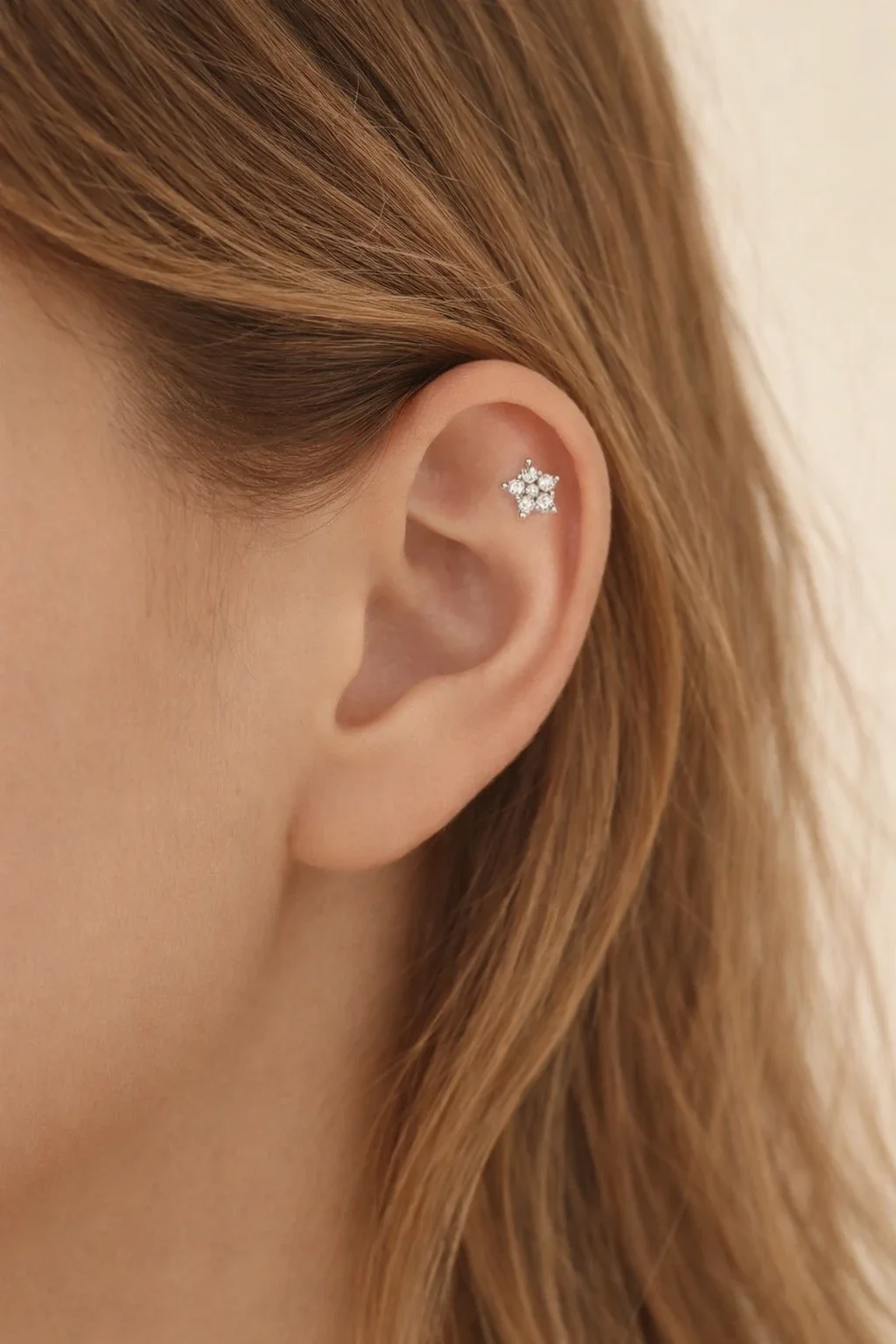
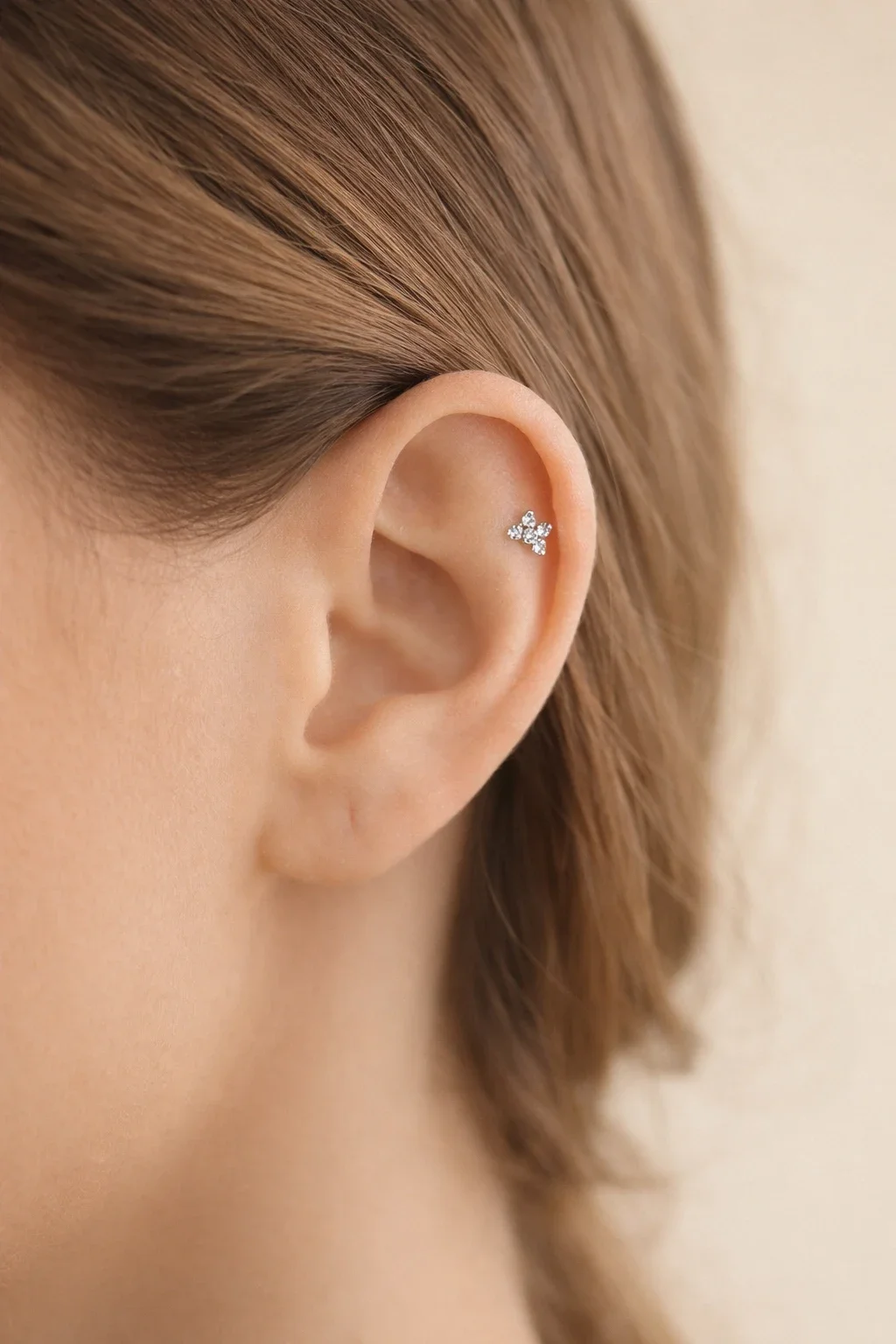
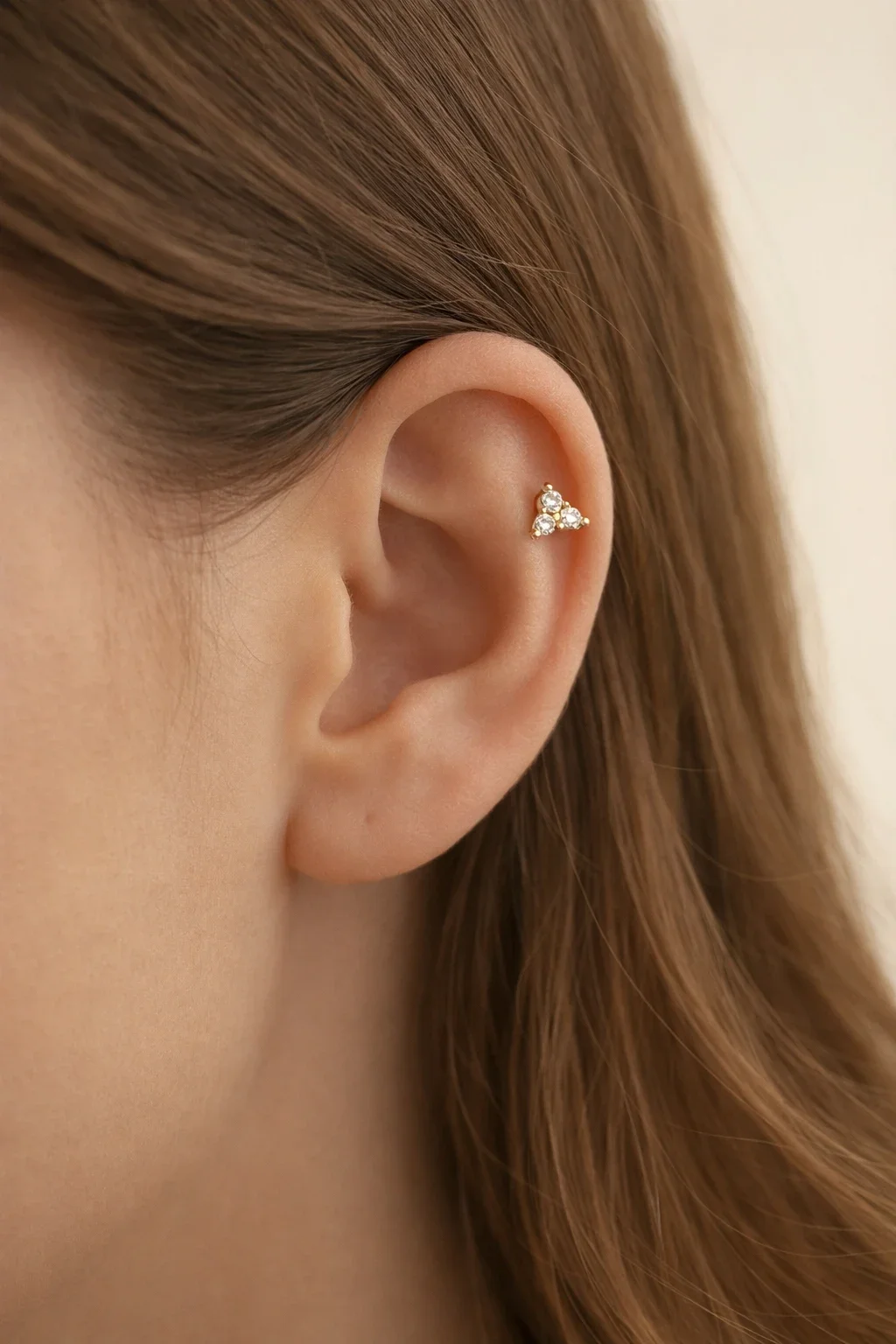
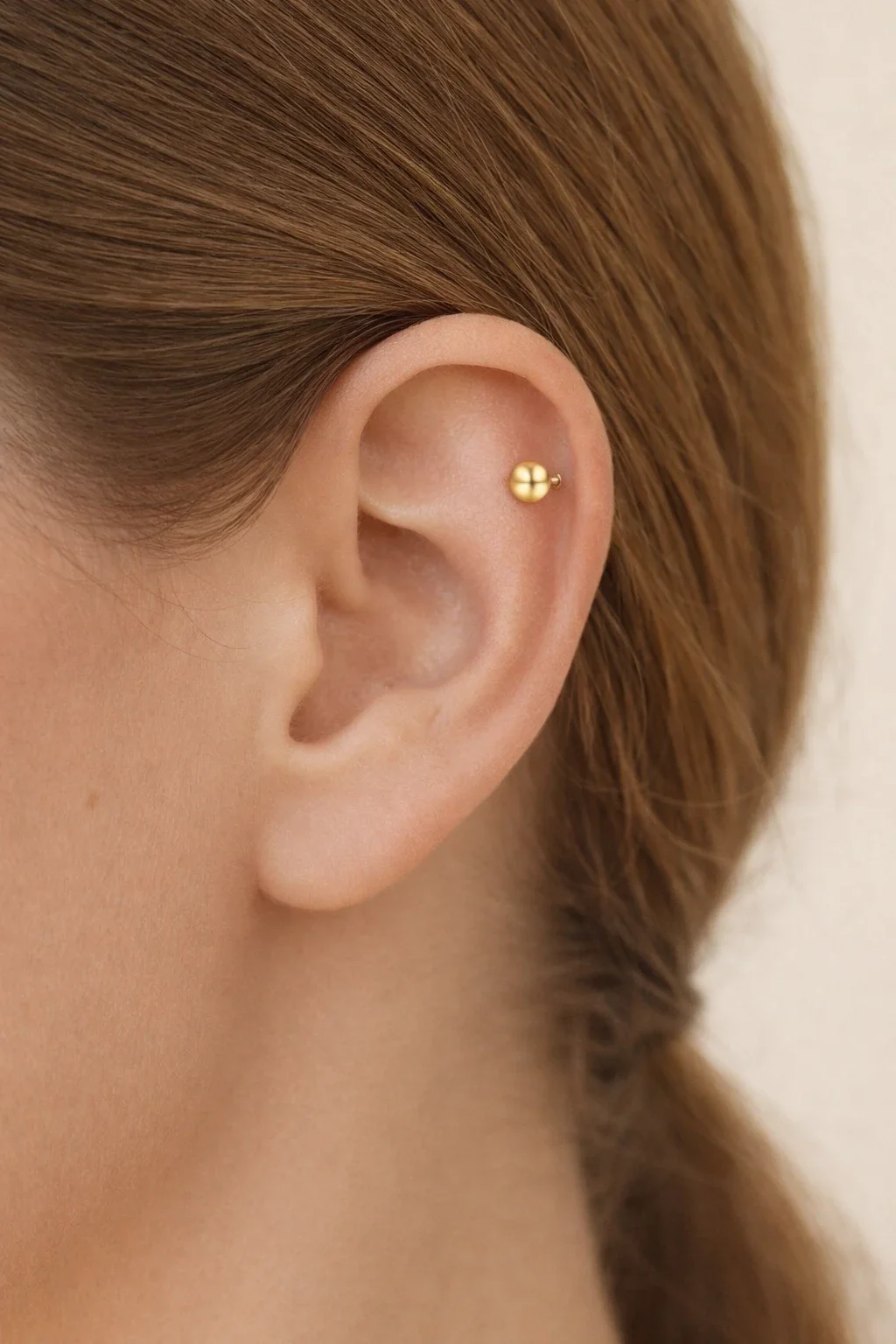
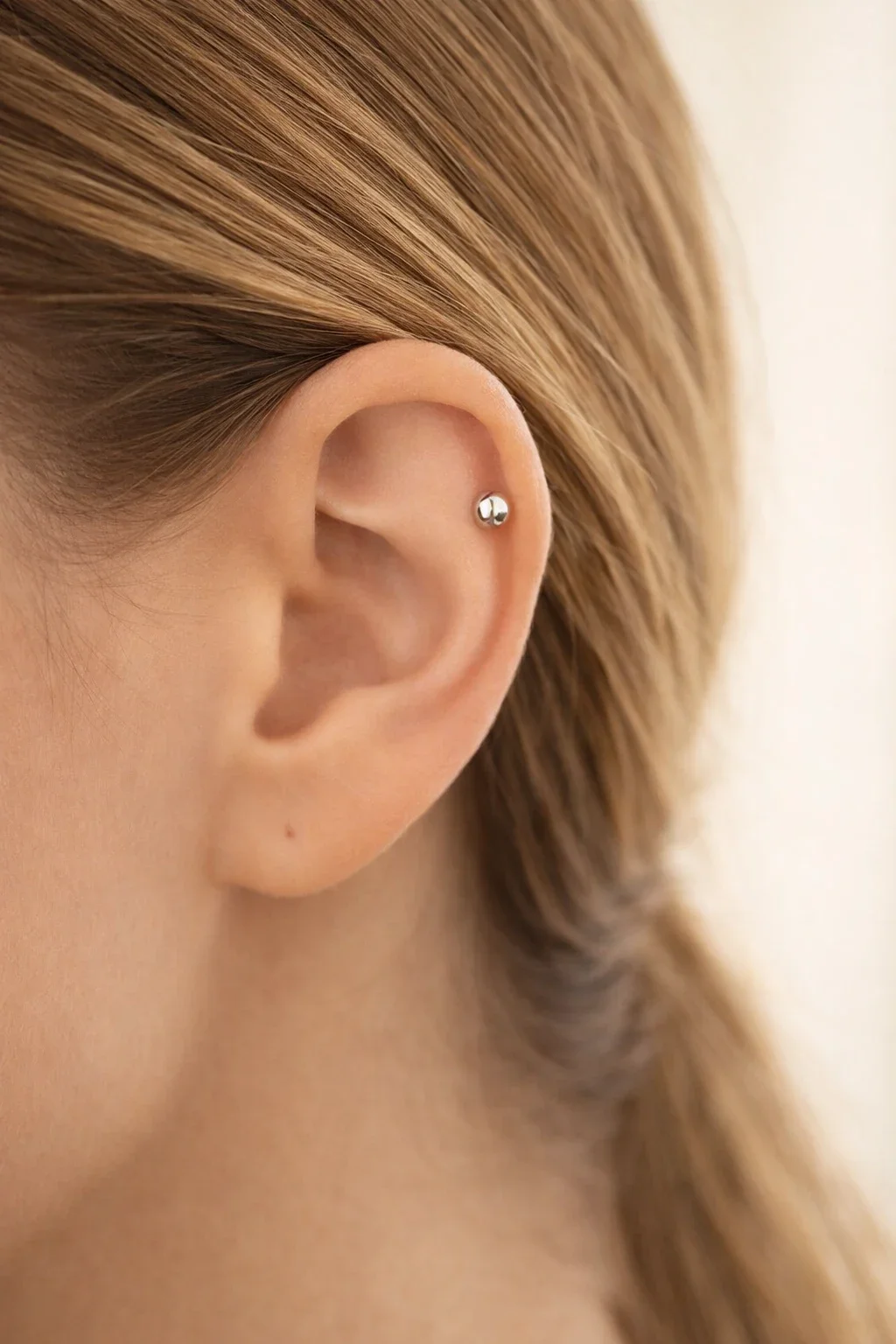
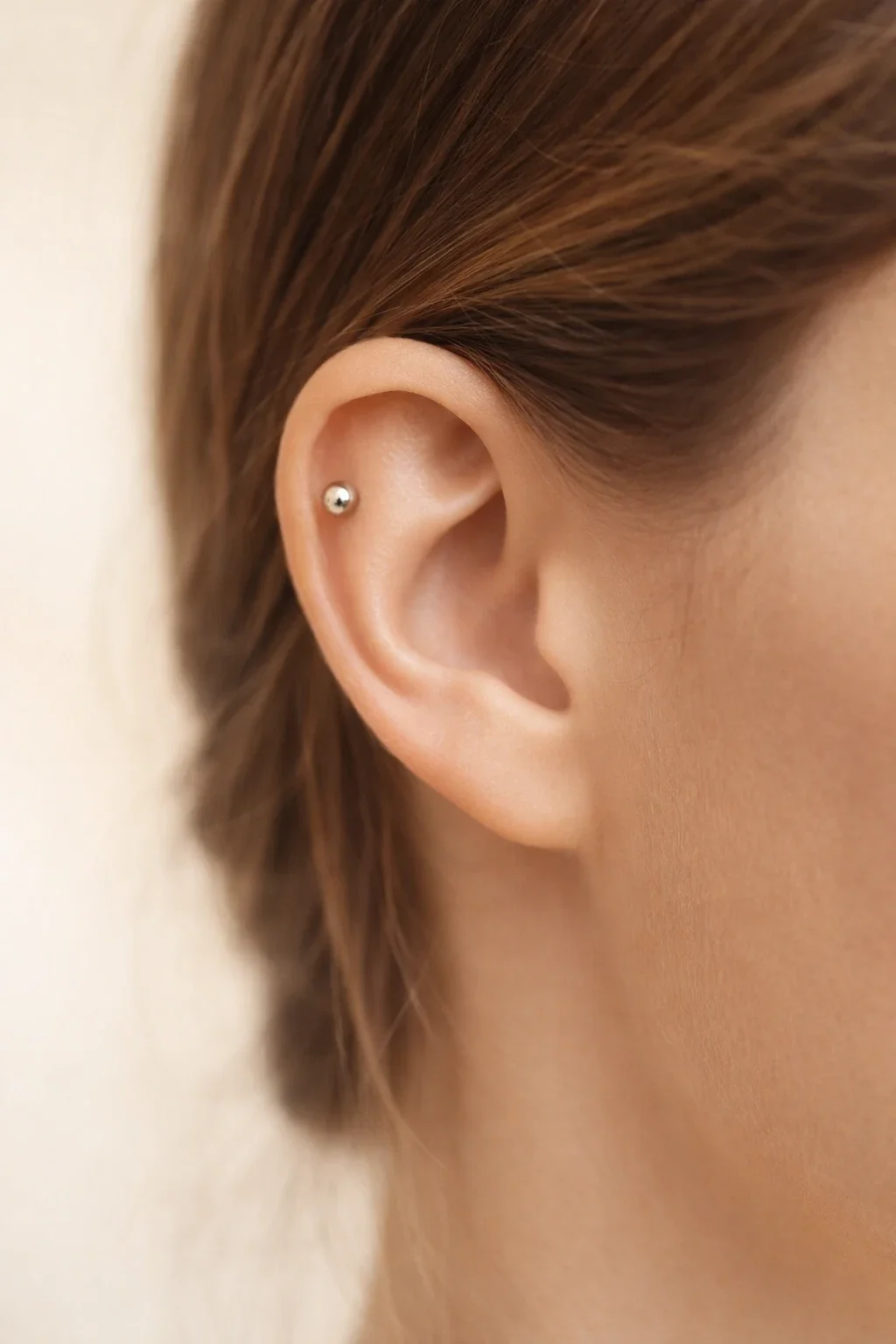
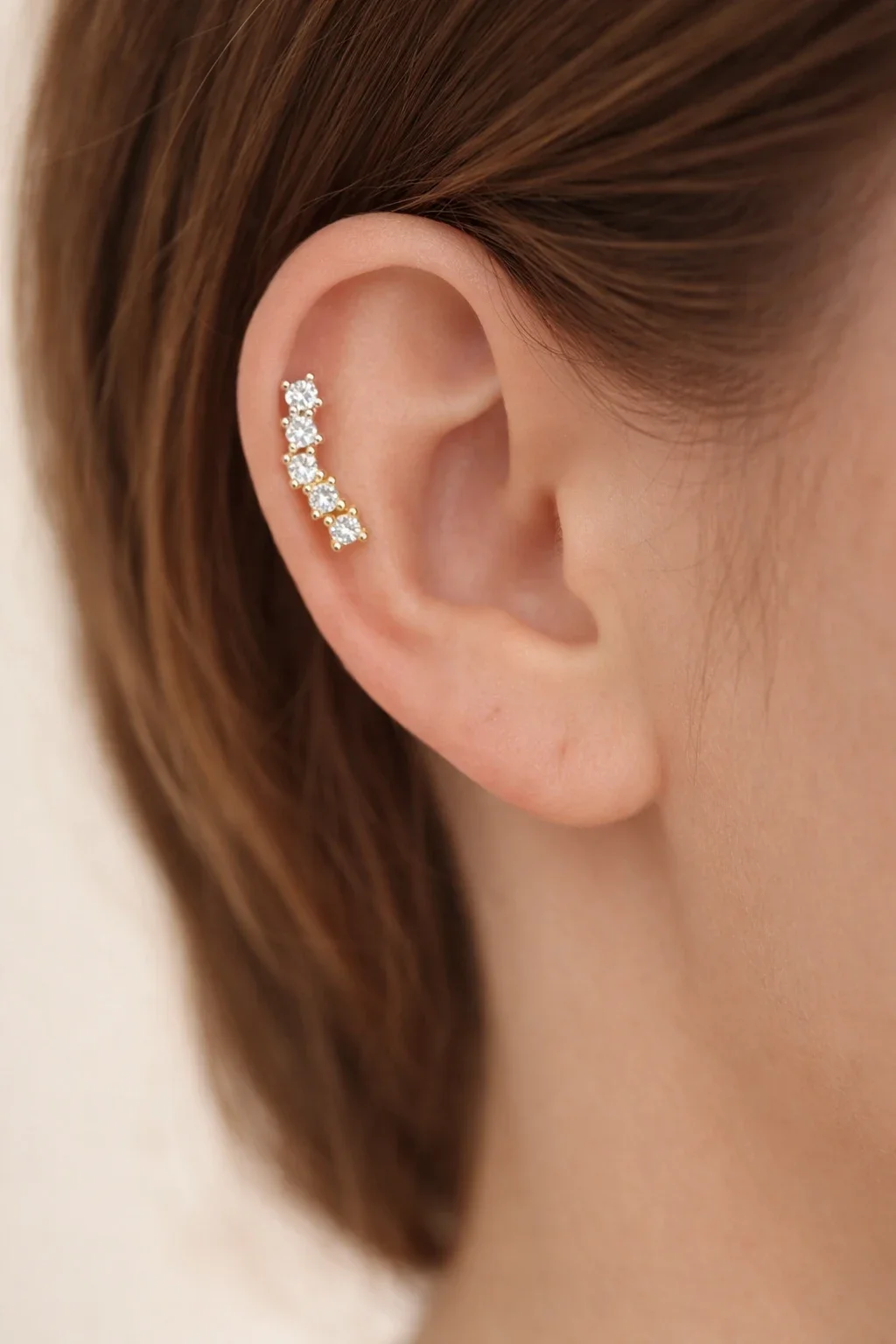
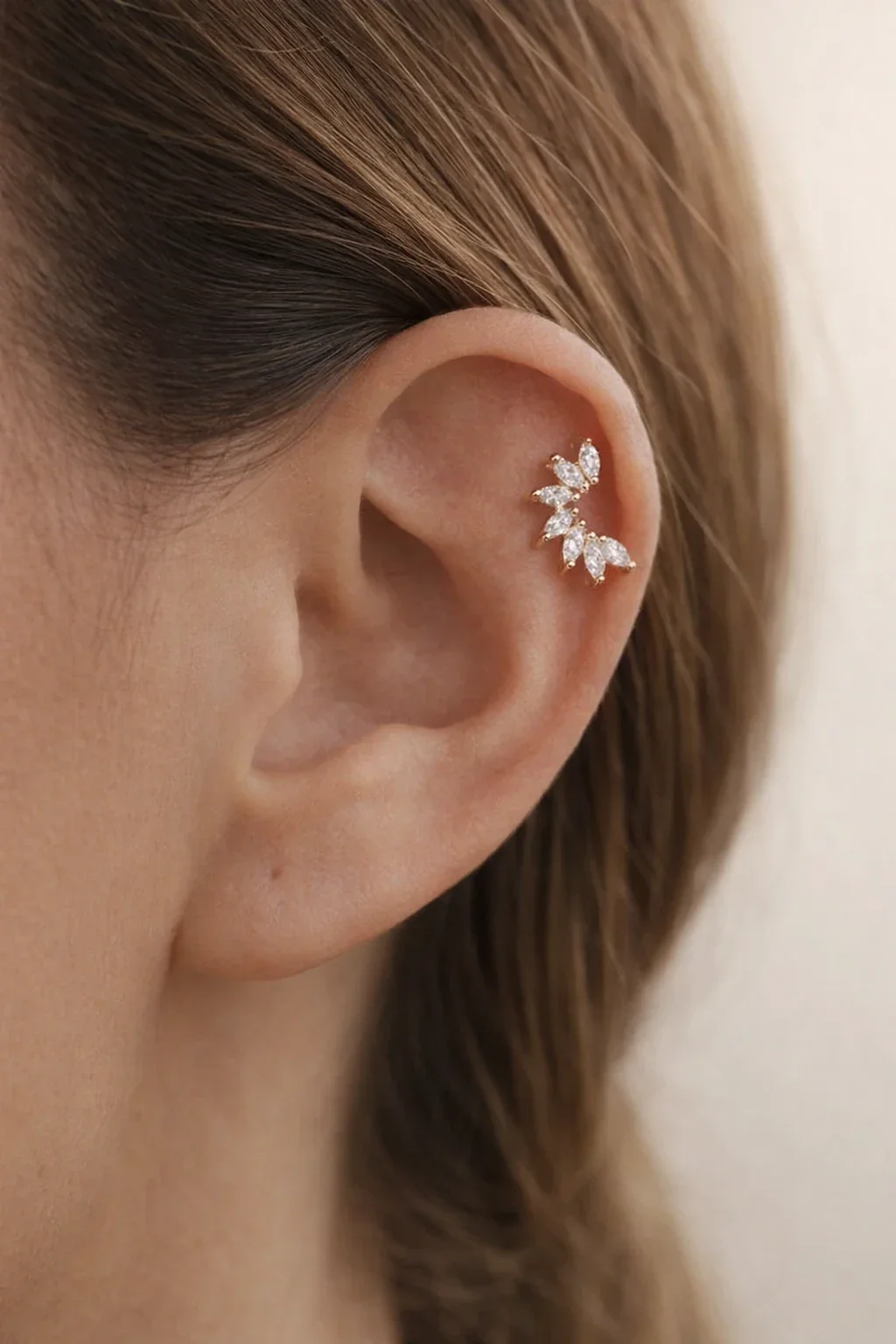
- Helix: the outer rim of cartilage at the top of the ear. It's the most popular cartilage piercing.
- Forward helix: the cartilage at the front of the ear, just above the face.
- Tragus: the small flap of cartilage in front of the ear canal.
- Conch: the central hollow of the ear.
- Flat: the flat area of cartilage between the helix and the conch.
The piercing itself should always be done by a professional piercer in a studio, with suitable initial jewelry (often implant-grade titanium). Our jewelry is made for what comes next: once your piercing has healed and you want to change your look.
The different types of piercing jewelry
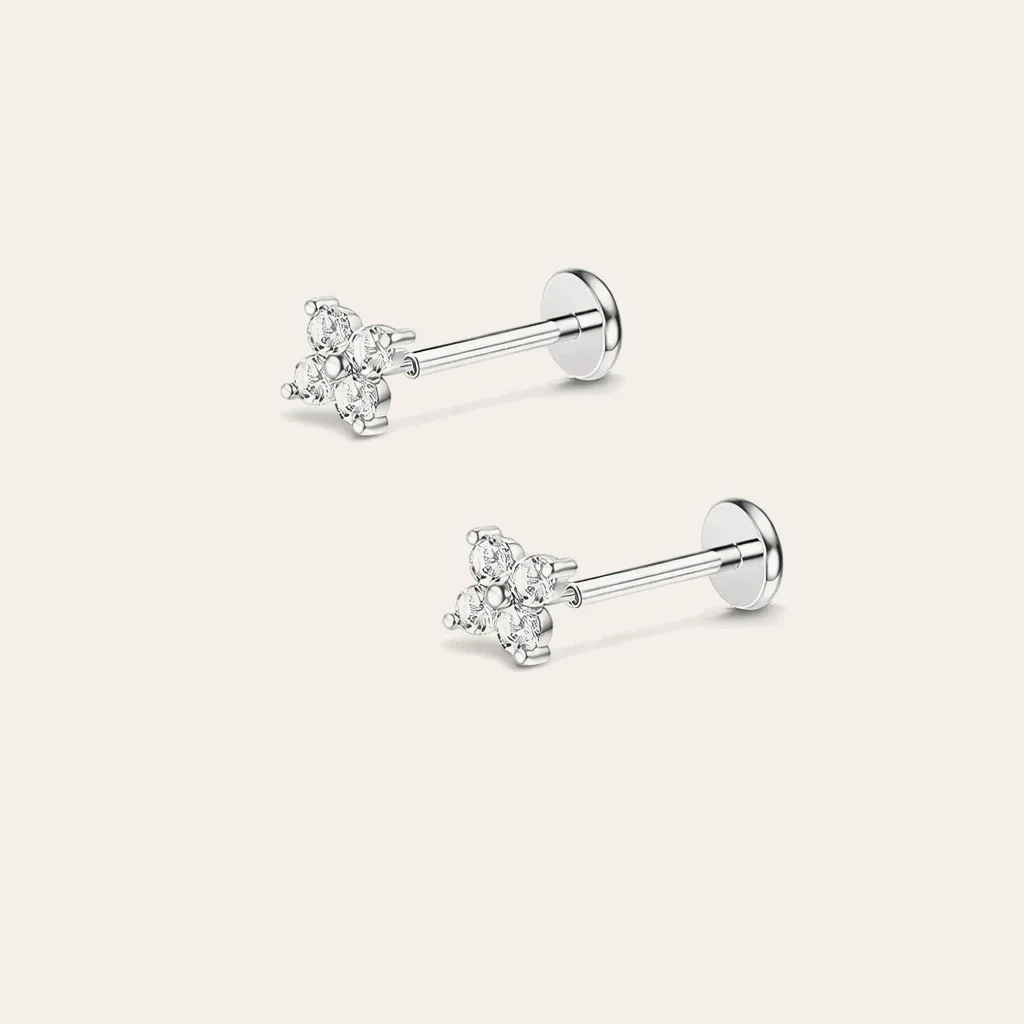
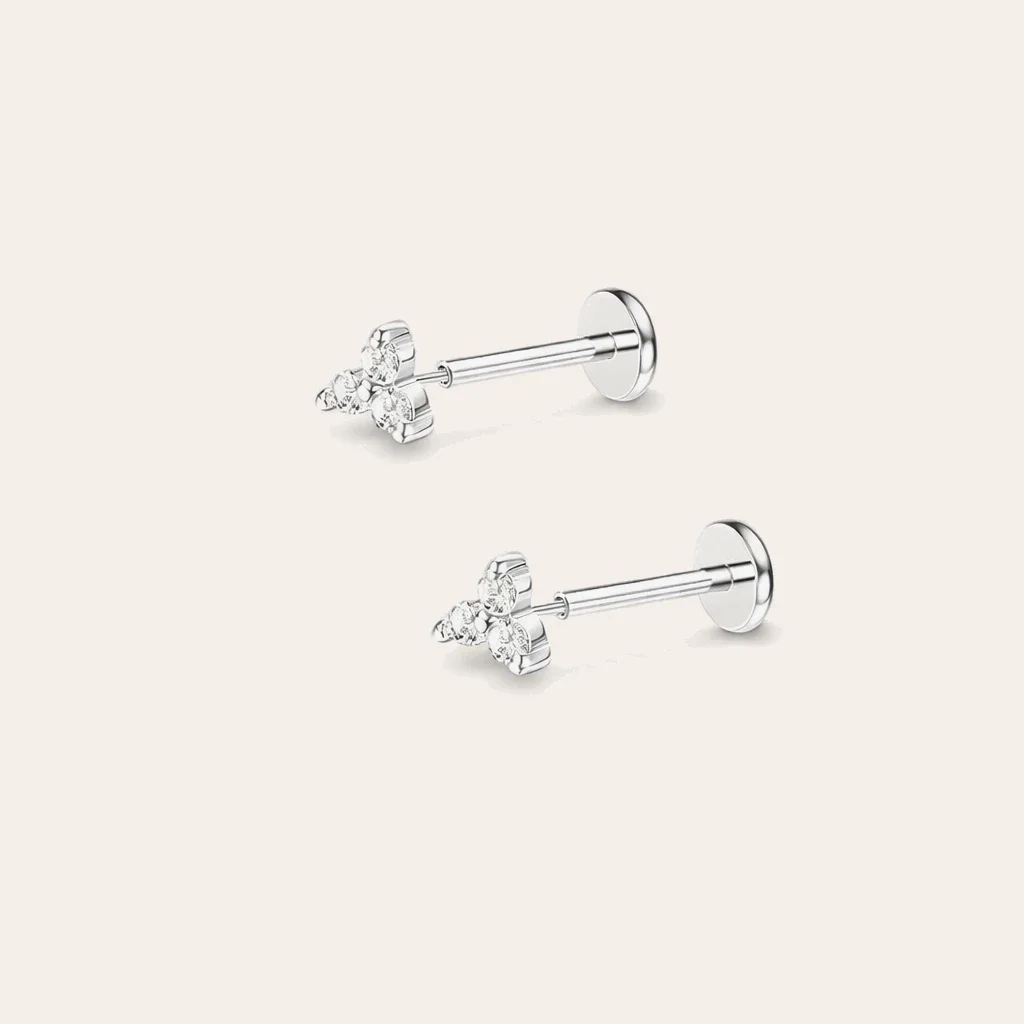
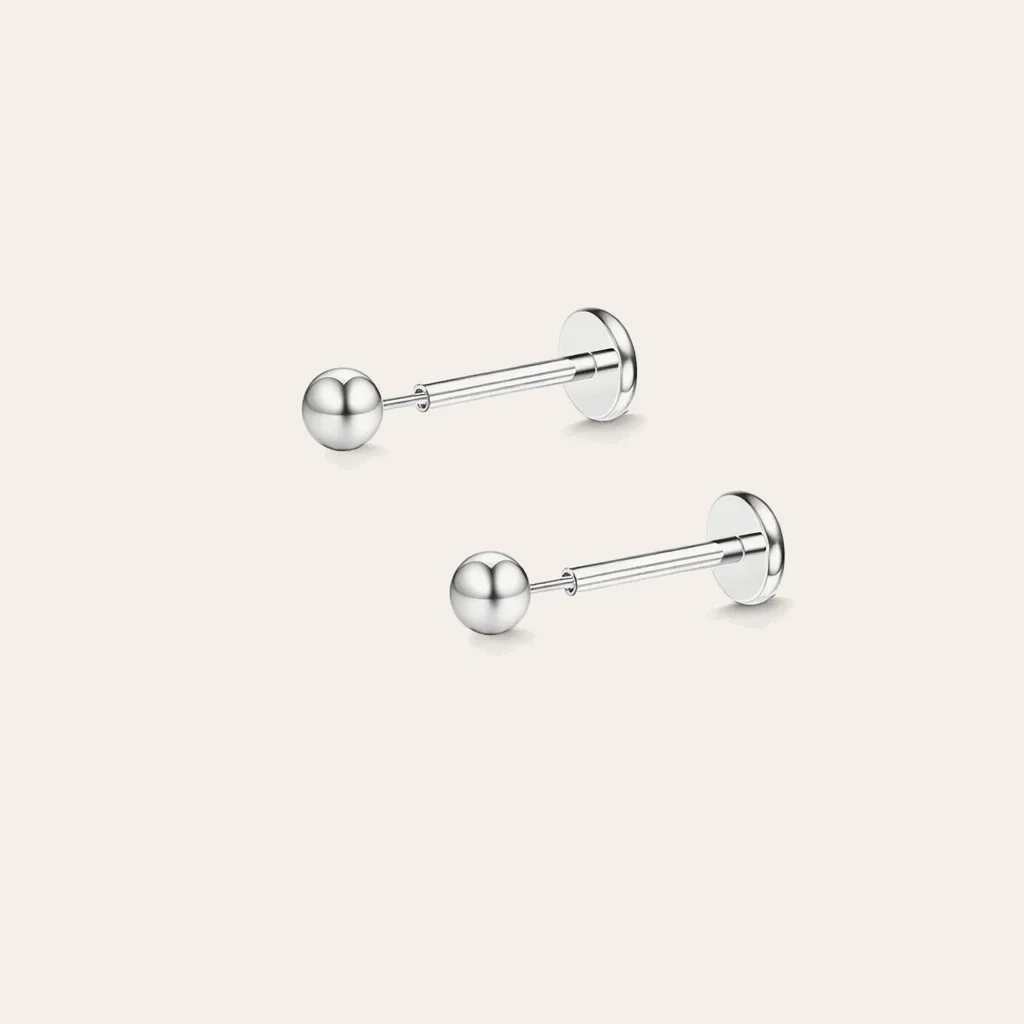
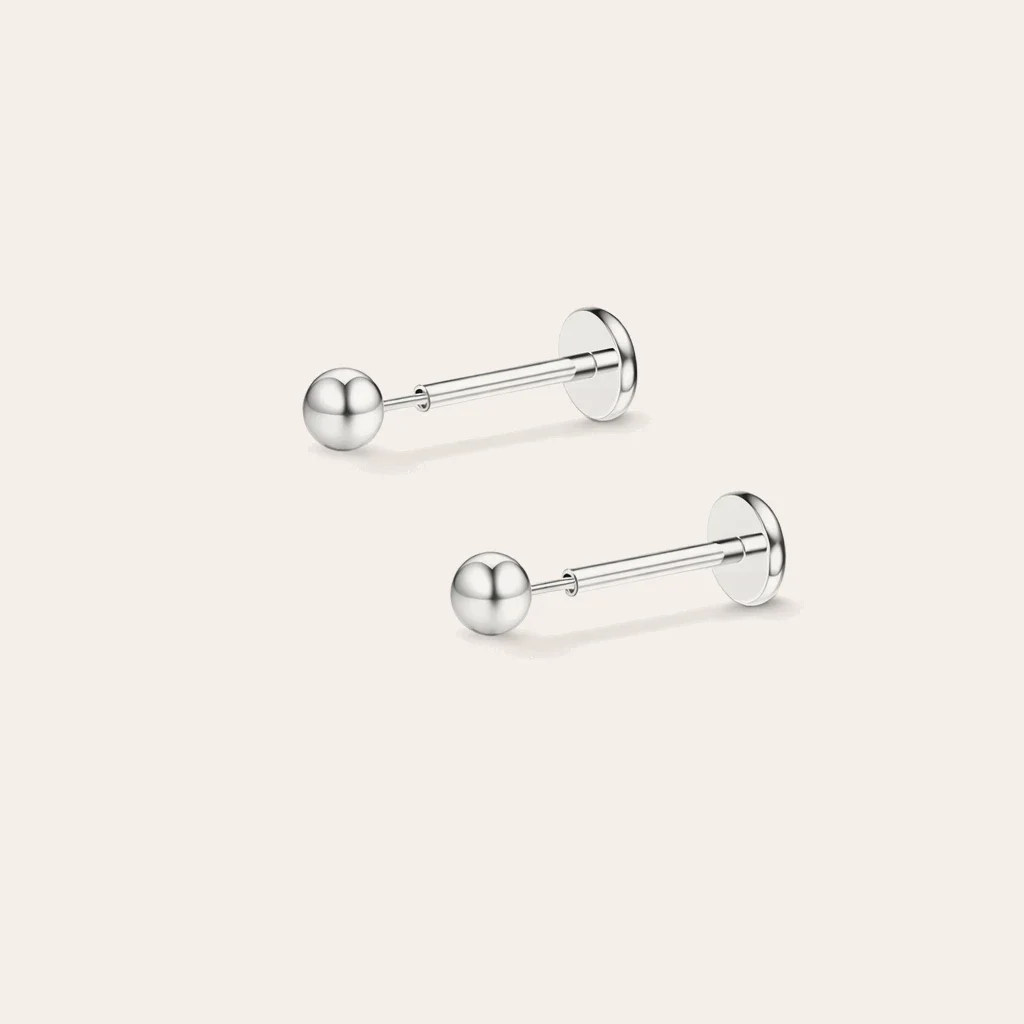
The flat back labret stud
A labret is a post with a flat disc at the back and a decorative top at the front: a ball, a trio of cubic zirconia, a small flower. The flat back doesn't poke or snag, making it the most comfortable jewelry for cartilage (helix, tragus, flat, conch) and for sleeping. It's named after the lower-lip piercing it was designed for, but it's worn everywhere.
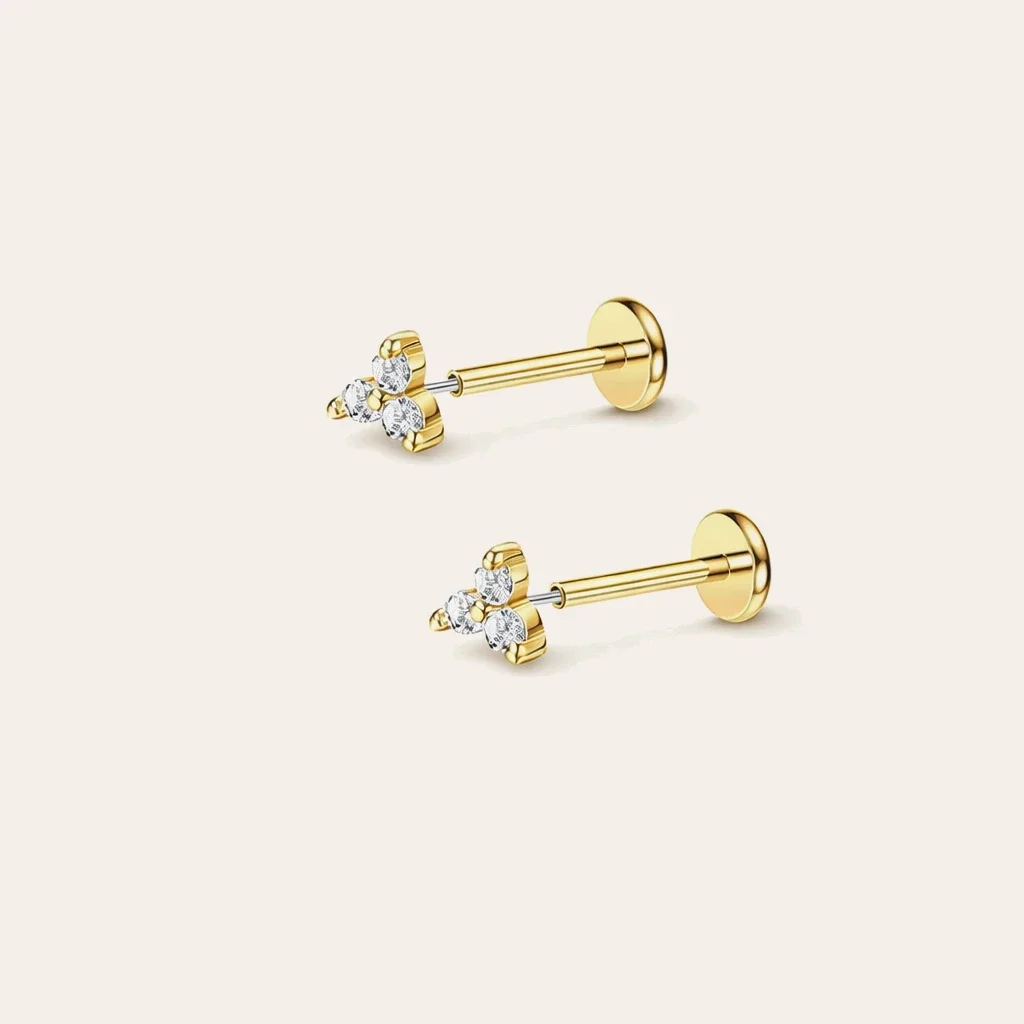
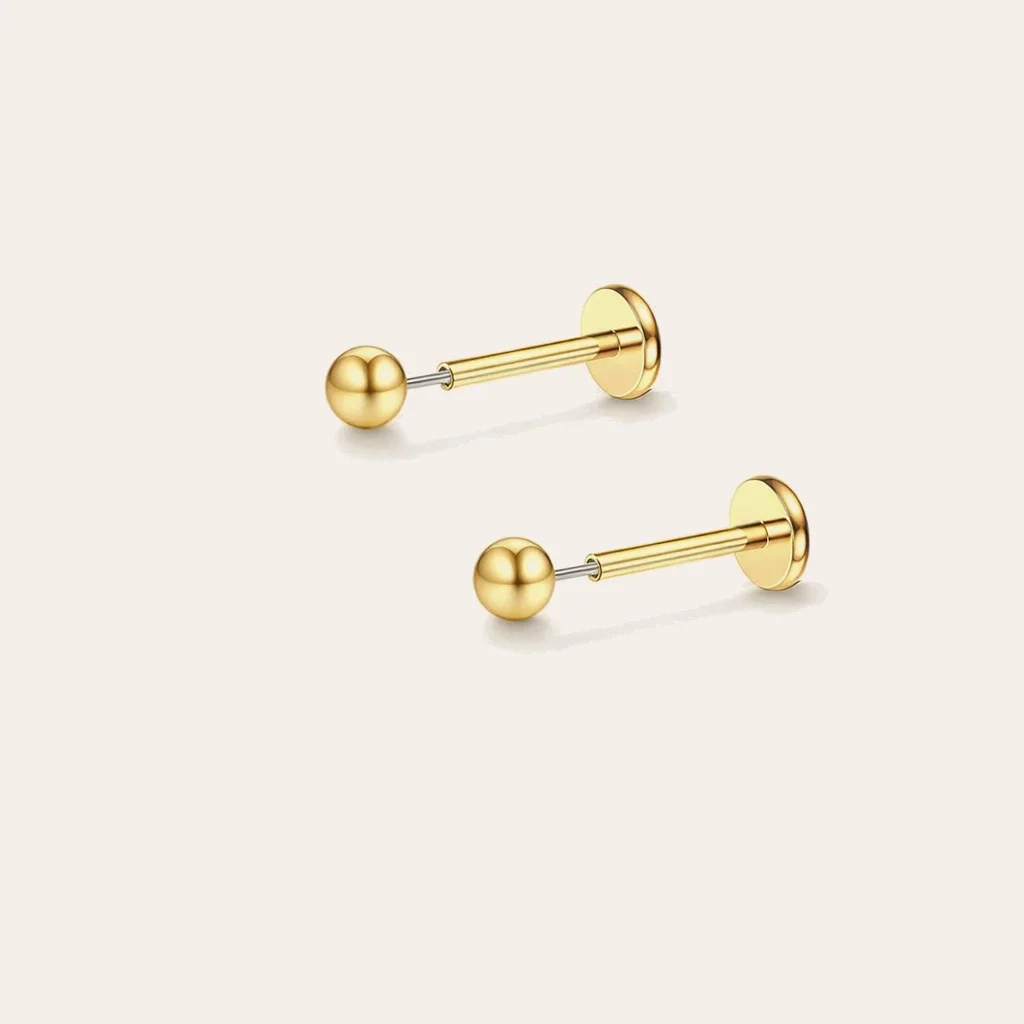
The screw-back cartilage stud
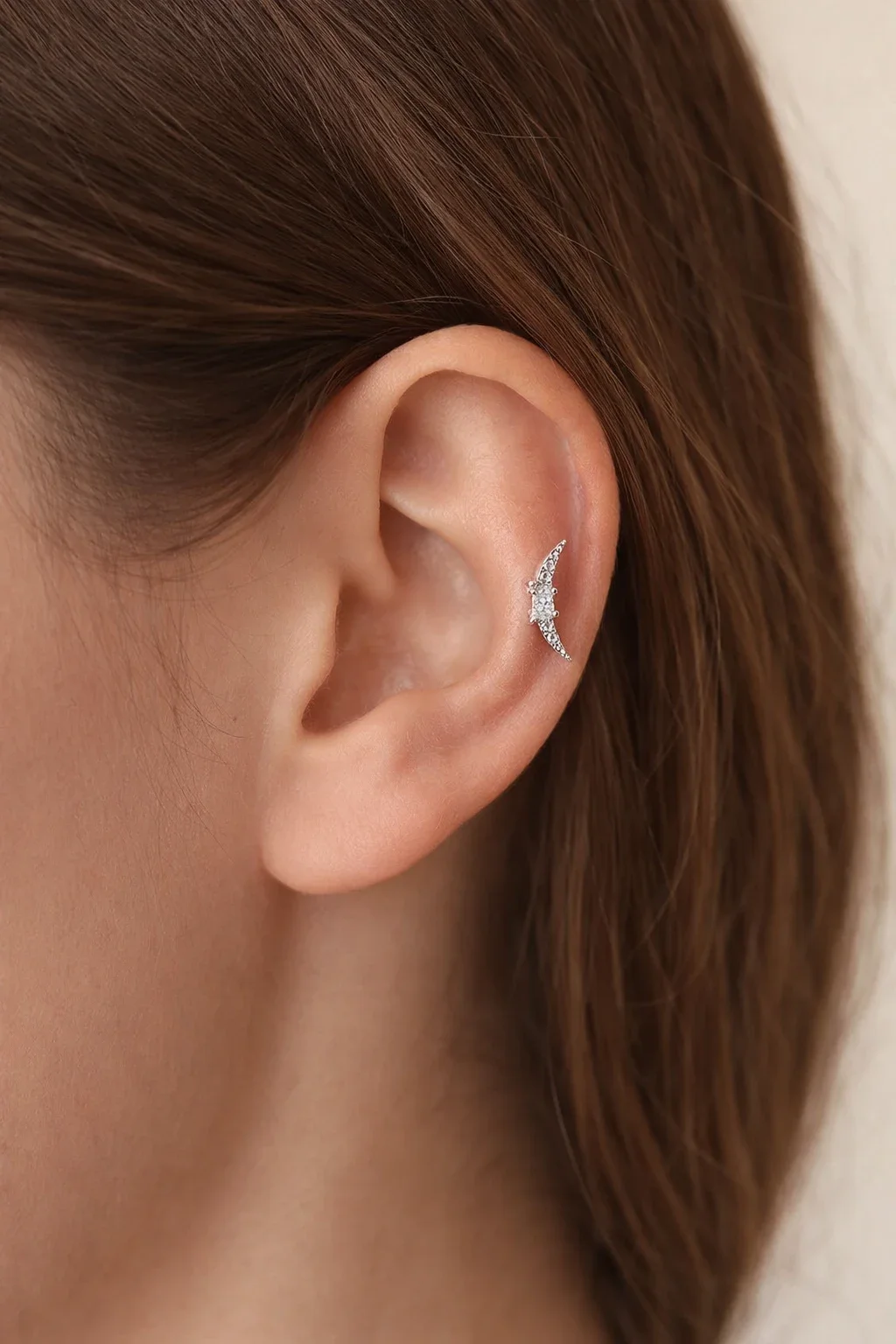
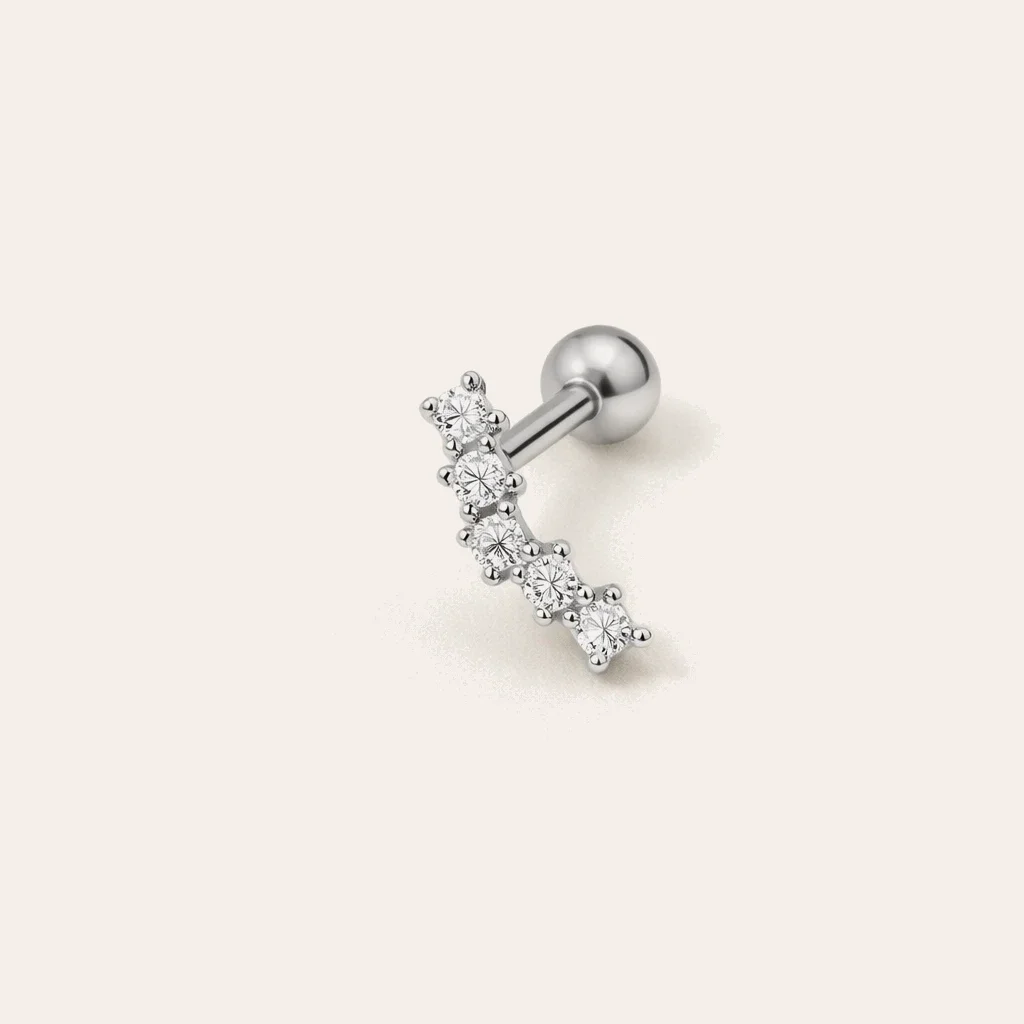
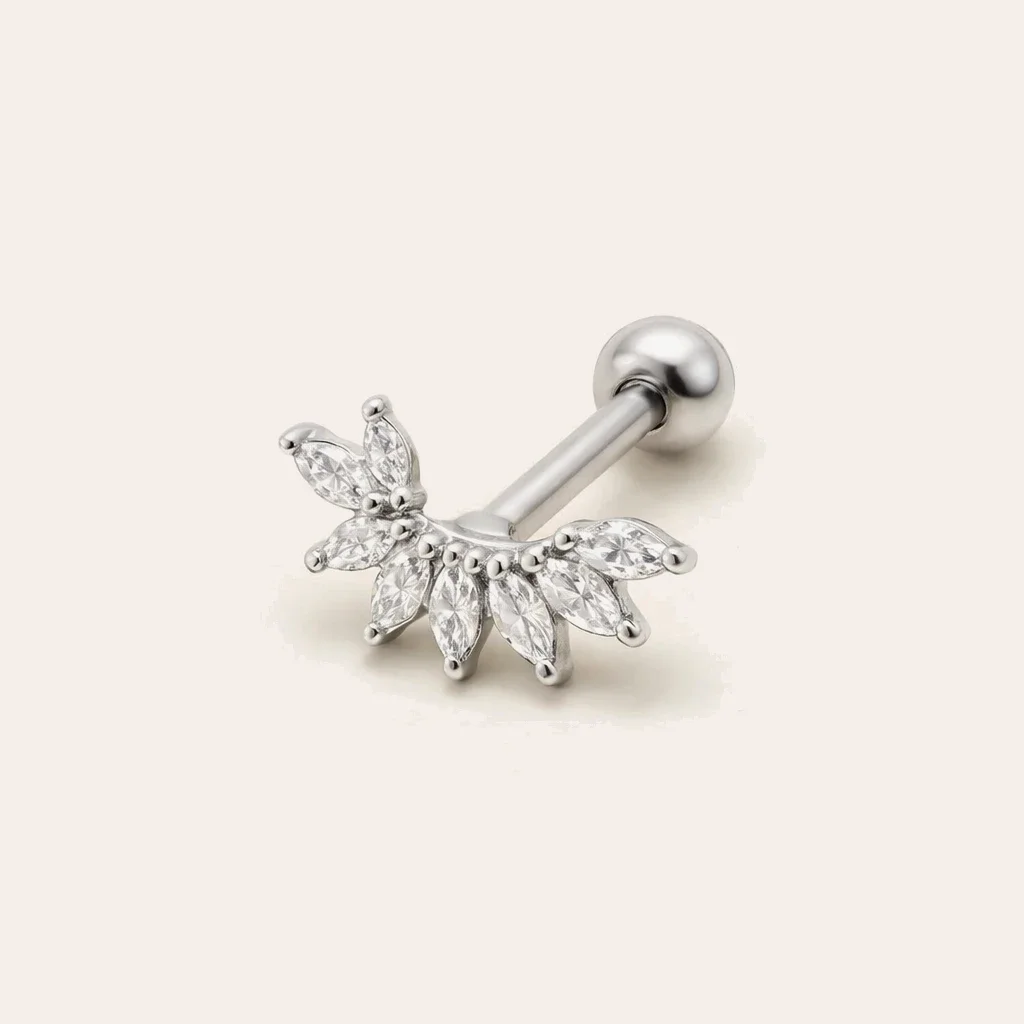
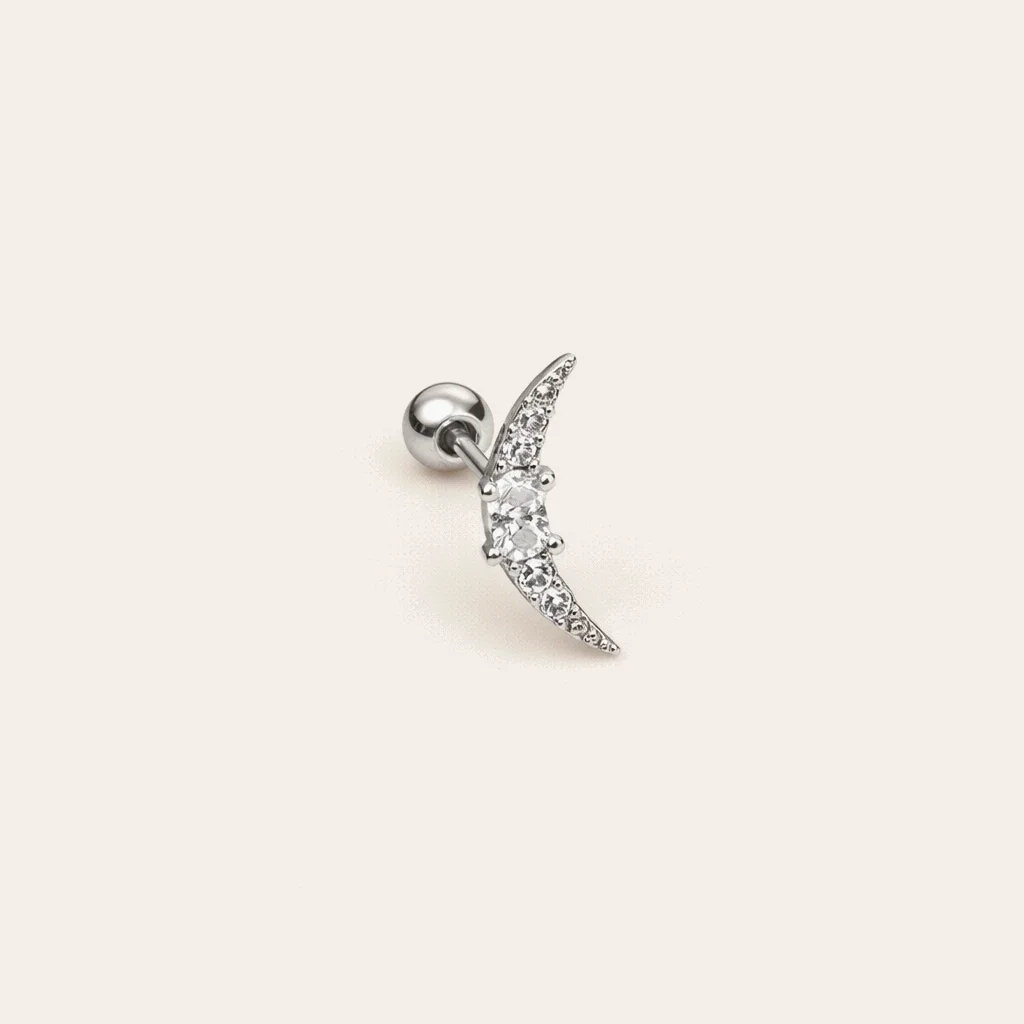
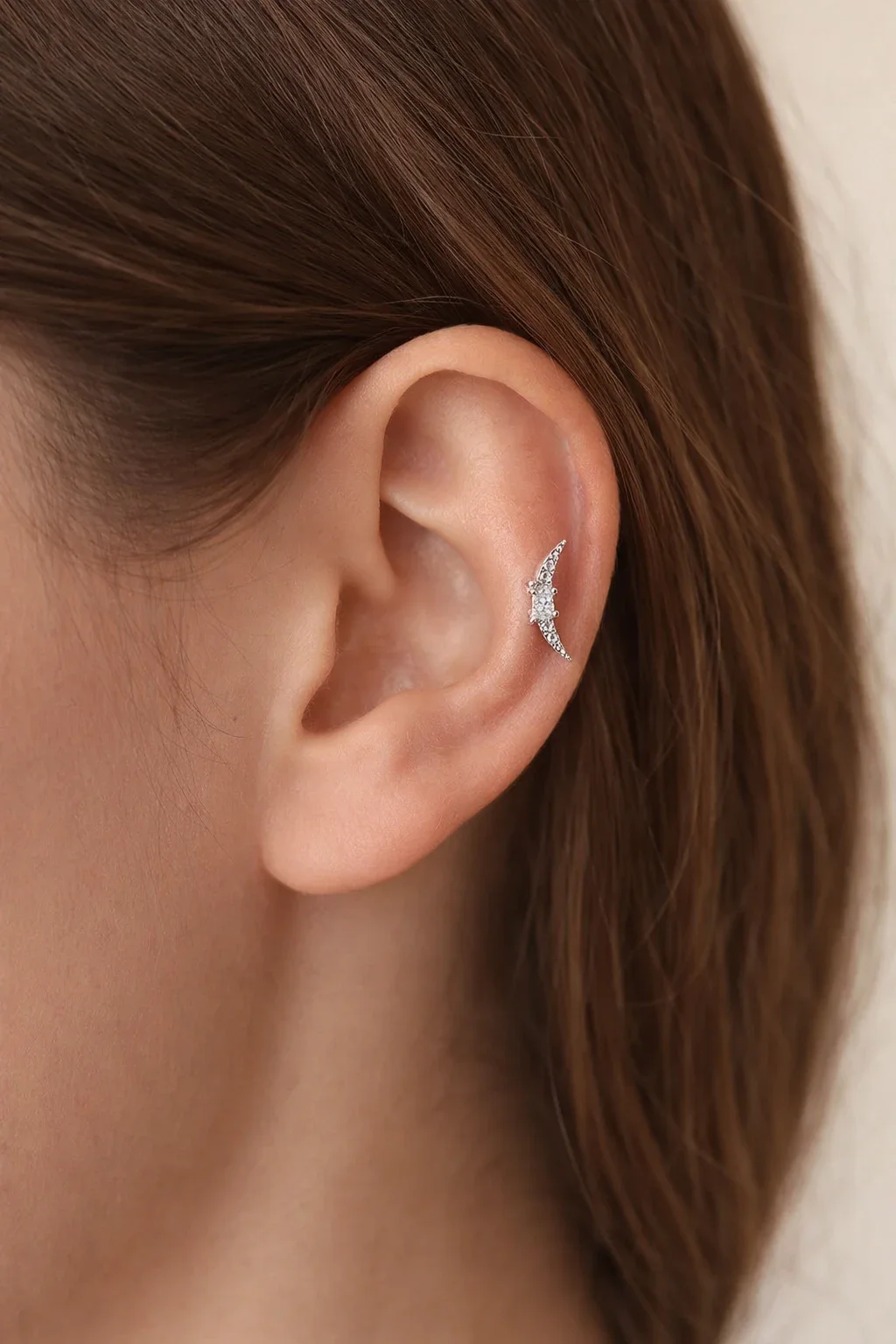
A straight post with a motif at the front (crescent moon, line of cubic zirconia, branch) and a small screw-on ball at the back. The screw closure keeps it from falling out, and the motif, more detailed than a labret top, stands out more. Ideal for the helix or upper lobe.
Hoops and clickers
A small ring that wraps around the edge of the ear. Beautiful on the helix or lobe, but best kept for fully healed piercings: a hoop moves more than a labret and can irritate a fresh piercing.
Faux piercings and ear cuffs
They clip onto the cartilage, no piercing needed. It's the way to try the look of a helix piercing before committing, or to complete an ear stack.
What post size should you choose?
This is the thing to check before buying. Piercing jewelry is defined by:
- its gauge (post thickness): 0.8 mm (20G) is the thickness of a standard earring; piercers often use 1.2 mm (16G) for cartilage. A post that's too thin "floats" in a larger hole; a post that's too thick should never be forced;
- its length (the part that goes through the ear): 6 to 8 mm (about 1/4 to 5/16 in) fits most helix and lobe piercings. Too short and it pinches; too long and it snags.
Our labrets have a 0.8 mm (20G) post, 7 or 8 mm long depending on the style: they fit standard 20G holes. If your piercing was done at 16G (1.2 mm), ask your piercer before switching jewelry. If in doubt, they can also measure your piercing.
When can you change your piercing jewelry?
Only once your piercing is fully healed. Cartilage heals slowly: it generally takes several months (often 6 to 12 months for a helix), versus a few weeks for a lobe. Your piercer is the best person to tell you when it's time. When you change it:
- wash your hands and clean the new jewelry;
- insert it gently, without forcing; if it resists, stop;
- if you notice redness, pain or discharge, remove the jewelry and see a professional.
Which material for a piercing?
Piercing jewelry is worn day and night, in direct contact with your skin, so the material matters even more than for a regular earring.
- Implant-grade titanium is the standard for a fresh piercing: it's what most piercers use.
- 316L stainless steel resists water and sweat and is generally well tolerated on a healed piercing.
- Solid gold never tarnishes but is far more expensive.
- Avoid: unspecified alloys and brass.
If you have a nickel allergy, ask your doctor and check the material on each product page. More details in our stainless steel jewelry guide.
How to build a curated ear
- Largest to smallest: the most visible piece on the lobe (hoop, drop), then finer and finer pieces as you move up toward the helix.
- One metal, or a deliberate gold-and-silver mix: see gold or silver jewelry.
- One standout motif: a crescent moon or a cubic zirconia branch on the helix, surrounded by balls or small stones.
- Leave some space: three to five pieces per ear are enough for a curated look.
For the lobe, choose from our studs, hoops and drops with our guide how to choose earrings.
Caring for your piercing jewelry
- Clean the post and top regularly with water and mild soap, then dry carefully.
- Check from time to time that the ball is screwed on tight.
- Keep spare pieces in a jewelry box: they're tiny and easy to lose.
More tips in caring for your jewelry every day.
FAQ
Can you wear a labret in your lobe?
Yes. Its flat back actually makes it very comfortable in the lobe, especially for sleeping.
What's the difference between a helix piercing and a cartilage piercing?
The helix is a cartilage piercing on the upper rim of the ear. "Cartilage piercing" covers every piercing through cartilage: helix, tragus, conch, flat…
Can you sleep with a helix piercing?
A flat back labret is the most comfortable option. Avoid sleeping on a fresh piercing.
How do I know my piercing gauge?
It's often listed on your piercing studio receipt. Otherwise, your piercer can measure it in seconds.
Shop all our piercings and women's earrings in stainless steel. Shipped with care from Aix-en-Provence, France, with free shipping to the USA.